Maruti Suzuki Victoris review, first drive - the new best-seller?
Now Maruti Suzuki is used to dominating nearly every segment it plays in but that has not quite been the case in the mid-sized C SUV segment. The Grand Vitara is a good seller but with the Victoris Maruti Suzuki is aiming to unlock the full might of its network. It will be sold through the Arena network and is better equipped and more affordable than its Nexa sibling the Grand Vitara. But does this pan out in the metal
Maruti Suzuki Victoris Styling
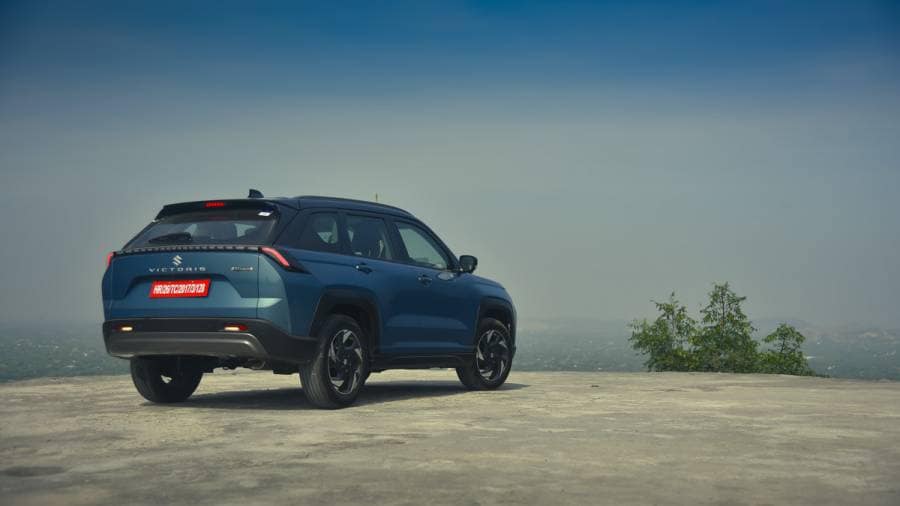
The Maruti Suzuki Victoris has just the right dimensions for the segment it plays in. The blocky look that Maruti Suzuki debuted with the Brezza has been extended here to create an Arena theme so to speak. So you have a smart face with the segmented lighting big air dams and flat simpler lines that give the Victoris a modern but still reserved look
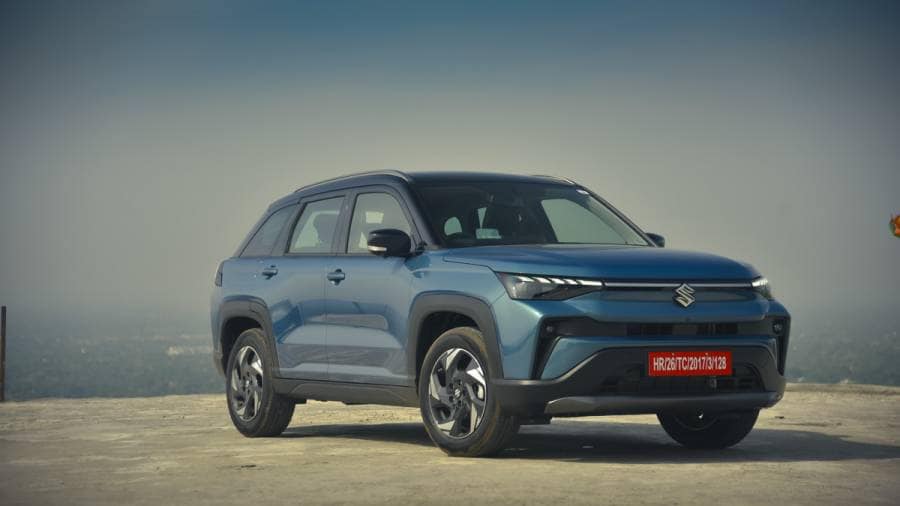
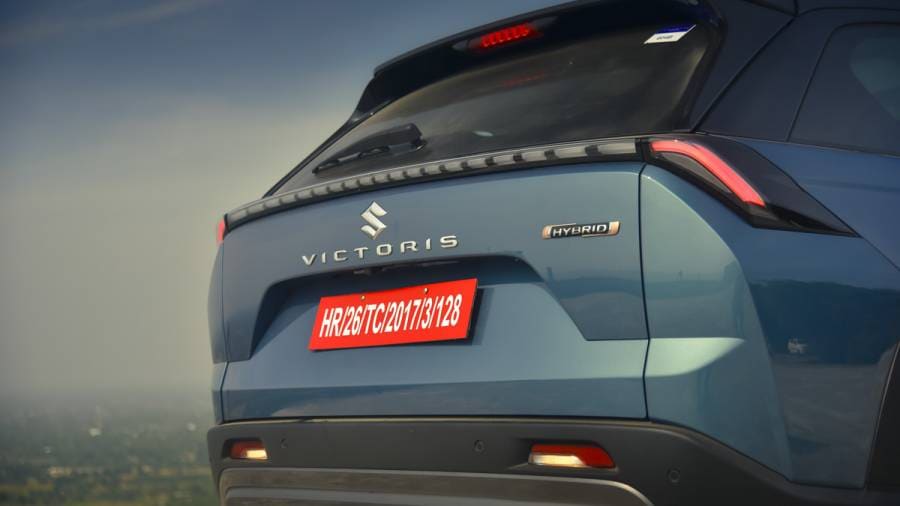
In profile you have quite a long estate-like glass area with a slightly sloping roof which gives the impression of the Victoris being longer than it is. There is a good 210 mm of ground clearance but we do wish the 17-inch wheels filled out the wheel wells better. The most striking design element is probably the full-width lighting at the rear. This will remind you of some more expensive cars but it draws attention and makes this SUV look wider than it is which is probably what many of you want in this segment
Maruti Suzuki Victoris Boot space
Maruti Suzuki has done some work to carve out more boot space with the hybrid Victoris and while the volume is similar at around 300 litres the flat floor and wide opening let you pack in cabin-sized luggage well enough for a family of four. You do have a high lip because of the raised floor that will need you to make more effort
With the naturally aspirated engine this is not a problem. The flat low lip makes it easier to slide luggage in more easily into the roughly 400-litre space and with the lower floor you have enough volume to fit larger strolleys better. A big concern though is that none of the variants come with a spare wheel as standard. All versions other than the CNG have a provision for this though with the spare available at an added cost
Maruti Suzuki Victoris Interiors
The Victoris may look quite different from the outside but the most effective changes have been made on the inside. It is a bit odd that the more mainstream Arena channel model gets the more premium cabin but either way it is quite a step up from what we have seen previously from Maruti Suzuki. The finish and sturdiness of its Korean and German rivals may not be there but the layered horizontal design and good mix of materials bring Maruti Suzuki much closer to rivals now
You will notice some hard scratchy plastics on the top of the dash and along the lower half and there is still some flex in the door trim when you use the windows but there is also generous soft padding with neat stitching along the dash face doors and centre console. The textured gloss black is limited to decorative panels that you will not scuff too easily and generally everything feels quite well screwed together like you find in Maruti Suzuki cars. The ambient lighting in the dash is a nice touch but again is restrained in the usual Maruti way
You notice quite a bit of the switches and components like the air vents lifted off other models but this has been dressed up with chrome and bronze highlighting to give a classier feel. Either way these are proven components that have a tactile functional feel that you know will last for years. That said the new steering wheel is a great addition that feels like the most expensive part of the cabin. It is the right shape, the buttons fall to hand easily and the leather is soft to hold. Speaking of buttons you will not find any annoying capacitive panels here. The toggle climate switches work well but an oddity is that there is no way to switch on the Auto AC mode other than through the screen. Thankfully a PM2.5 filter has finally been added
Practicality has improved too. You finally have two type-C chargers in the front and a neatly stacked wireless charger. The storage spaces in the centre console are large and so are the door bins and glove box
You now get a fully digital instrument cluster for the first time in a Maruti Suzuki. This 10.25-inch screen may not be the brightest but it is especially simple to navigate on the move. You have loads of information it is easily configurable and you also get turn by turn navigation updates from your phone projection which is quite helpful. This makes the HUD somewhat redundant but it is a convenience that you get used to quickly enough
You also have a new touchscreen interface. It is still the same 10.1-inch size but the bezels are smaller and the interface is more intuitive and fluid. A widget-based layout makes most functions easier to access than before. A good addition is that of in-built navigation and a wider range of connected features
The 2,600 mm wheelbase is not any different from earlier so you have a familiar rear-seat experience in the Victoris. It is not the most spacious car in this segment. Packaging the hybrid system seems to have moved the second row forward. This does mean that there are other similar-sized cars with better knee room and you have a slight central hump to contend with. The high seat also takes away headroom which will be a problem if you are over average height.
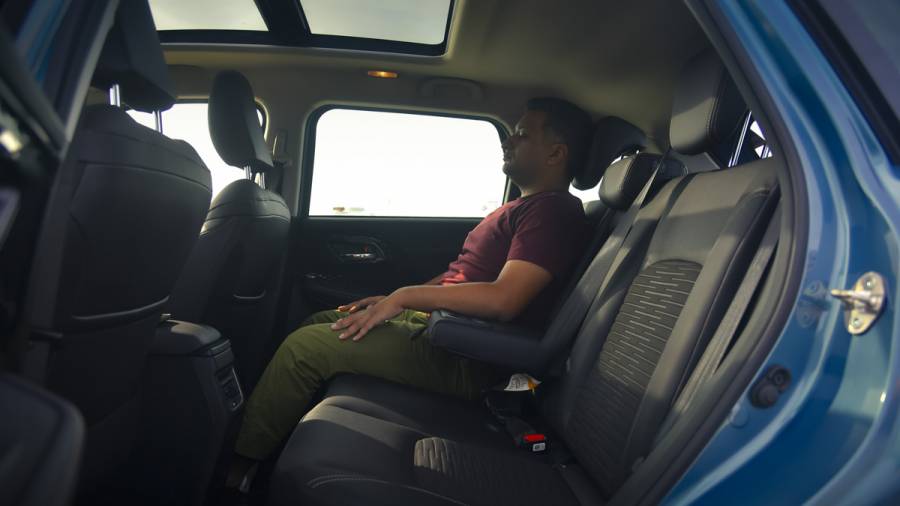
The seat itself has been improved so while it could still do with better thigh support there is slightly denser cushioning and better contouring. The seatback is at a good angle too and the base is flat enough for the occasional fifth person to travel along
The panoramic sunroof adds a spacious feeling especially with the all-black cabin option and the shade is a better quality now. That said the roof lining could have been improved. You do get more equipment like the two type-C chargers and a small storage cubby even if the rear door pockets could be larger
Maruti Suzuki Victoris Hybrid Driving impressions
The Victoris has an easy traditional SUV driving position that you will get used to quickly. You have an unobstructed view, the controls come to hand easily as in most other Maruti Suzuki cars and the car does not feel too large at any time. The front seats have been reworked for better support and they seem to be more comfortable over an extended duration than before. You could still do with more thigh support and the big fabric inserts do not let the ventilation function be as effective as it could be.
The hybrid system is derived from the Grand Vitara and makes 92 PS 122 Nm from the petrol motor and 80 PS 141 Nm from the electric motor paired with an eCVT. To start with, the improvements to the Victoris structure have helped NVH. The engine sounds a bit less rattly and few vibrations are felt within the cabin although this is still not as refined as some other ICE powertrains in this segment. But then you have that nearly unbelievable 28.65 kmpl efficiency figure.
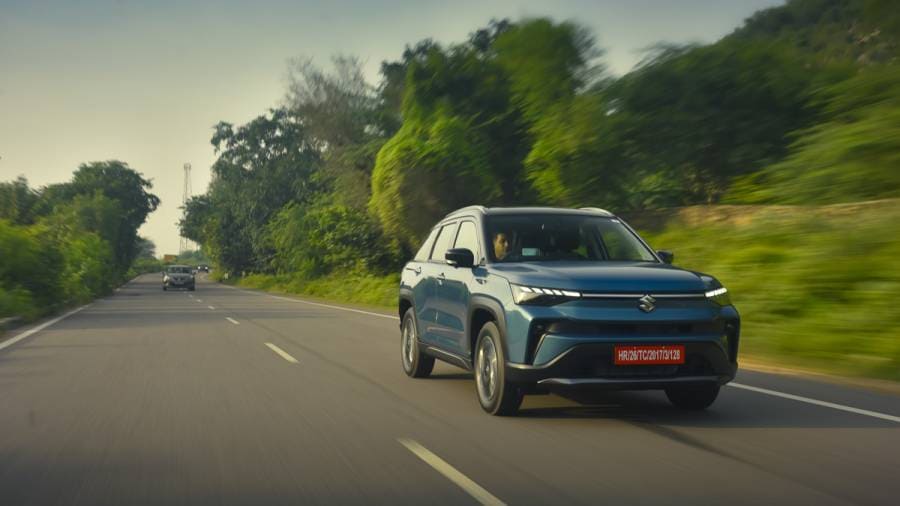
So like before this hybrid system feels natural and seems to do its best to extract as much efficiency as it can, especially when the battery is at a higher charge level. So you will find that rolling off or even at a high-speed highway cruise it will run on electric power alone for short durations. It has also got a good deal of shove up to middling city speeds. So it makes life on a commute easy.
That said at higher speeds you miss the solid wallop of torque that you can get from a turbo petrol or diesel. This hybrid cannot quite give you that performance at higher revs where the CVT character comes through. It also gets quite noisy at these times. Otherwise in calmer driving the CVT is good. The electric power smoothens out the gearbox laggy traits to a good extent and you have that uninterrupted driving experience that most other gearboxes do not provide. Some work seems to have been done to improve this but we wish there was more engine braking dialled in. Even with the Brake mode the Victoris can freewheel a bit too much for our liking on slopes. You also get drive modes but these do not bring about as much change as you might think.
As its powertrain might suggest the Victoris works best on the move when driven calmly. The steering is light and easy at city speeds but it does call for some guesswork at higher speed. It is not the most direct and does not seem to add feedback. The top hybrid variant is 70 kg heavier than the equivalent naturally aspirated version which does mean that Maruti Suzuki has had to draw a fine line between plushness and control here. You notice the weight here and the hybrid rolls more apparently around tighter bends. Just like the powertrain it is best when you dial down your excitement from behind the wheel.
At certain times at lower speeds over some really bad patches you do have a slightly sharp edge and you are not completely cocooned from what is happening outside. That being said, there is that solid reassuring feel from behind the wheel. In the larger scheme of things this is a comfortable car. Over smaller potholes and uneven surfaces the Victoris keeps you comfortable which seems to improve the faster you go. Although it could be steadier on a high-speed cruise you have to make small corrections to the steering wheel often to keep it straight.
Maruti Suzuki Victoris N/A mild hybrid driving impressions
For many of you the added cost of the hybrid probably will not make sense which means that the mild hybrid naturally aspirated 103 PS 139 Nm 1.5-litre petrol with the six-speed torque converter could be all the car you need. Now the outputs can seem underwhelming but the Victoris is only 1,225 kg in this form which means that performance is adequate.
Like most Maruti Suzuki engines you get off the line smoothly and there is a clean wide powerband for you to play with. It is not the most rev-happy motor of its kind especially with this gearbox but you do feel like the powertrain is focused on giving you a smooth experience. Yes it could be more refined and it takes a while for it to get to high speeds but it does so in a predictable and fluid manner that will be good for the everyday driver.
The Aisin gearbox is inoffensive like it always is, the shifts are soft and well timed and do not seem too focused on efficiency. You always seem to be in the powerband and if you do want to speed things up the manual mode does let you do that to an extent although it usually avoids getting anywhere near the red line in this mode too. The mild hybrid system too seems to give you just that touch of assistance to smooth everything out.
But really what seems to add a dose of energy to this version of the Victoris is that it feels much more cohesive and lighter on its feet. It feels as solid as the hybrid but seems to damp out broken roads better. There is a softer edge that the hybrid lacks.
The steering is not too different but the body movements seem tighter and more secure. The Victoris leans more confidently and contains its mass better in this version. You feel more confident behind the wheel because of this and the car feels more manoeuvrable in every situation. Although the brake feel is quite a bit less secure than the hybrid variant.
Maruti Suzuki Victoris AWD track experience
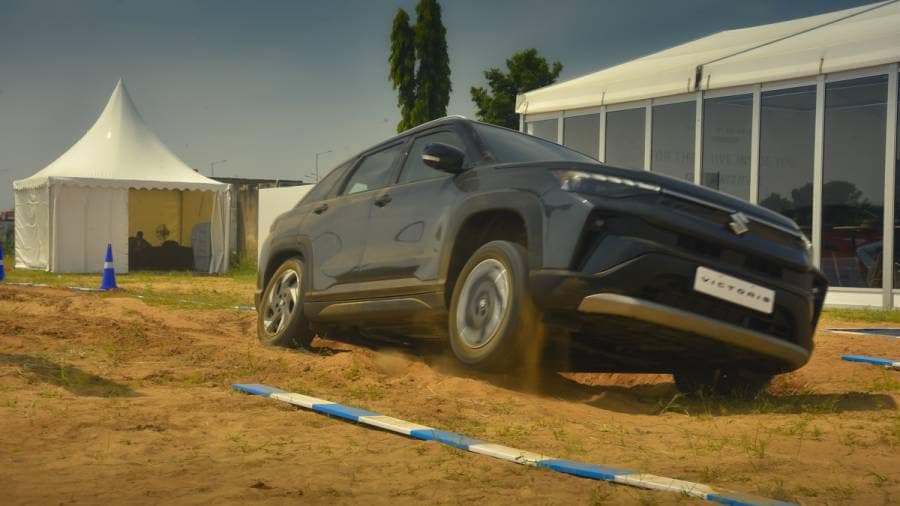
The Victoris also gets an AWD variant which we drove on a prepared off-road course. This was not an especially challenging track but we did get a demonstration of the All Grip system and its various modes. In the Lock mode it is quite capable and will get you out of a tight situation if you find yourself in one. The Victoris has a fairly competent traction control system and a tough but light chassis that helps it in the rough stuff. Although for truly serious off-roading the Jimny is king.
Maruti Suzuki Victoris Price, Verdict
With prices topping out at Rs 19.99 lakh for the hybrid, the Victoris is especially efficient, has a modern interior and is potent enough to make it one of the more logical everyday SUVs you can buy in this segment. But the top naturally aspirated AT version could be the sweet spot at Rs 17.77 lakh. While the back seat is a bit tight in both and this engine is less quick and nowhere near as efficient it could be the one for you if you are not going to rack up a load of mileage. The lighter cabin better dynamics and longer features list sweeten the deal. The top AWD variant priced at Rs 19.22 lakh also seems worth the upgrade if you want that added layer of capability.
-NA-
1462cc
Manual
-NA-
138
17.3 Kmpl
Related Stories