The Localisation Illusion
India is in an "I-told-you-so" position amongst Europe's local-content debate
In Stuttgart this week, a boardroom conversation seems to have quietly admitted what the global car industry rarely says out loud. The next big automotive fight may not be about electric versus petrol, software versus hardware, or even China versus the West.
It could well be about where a car is allowed to be born.
That is what lies beneath the recent warning that 2026 could bring an intense political and industrial clash over localisation, or "local-content," rules. The European Union should "handle with care" any measures aimed at increasing local automotive content to counter threats from China, Mercedes-Benz CEO Ola Kallenius said, to avoid "unintended consequences" such as retaliation.
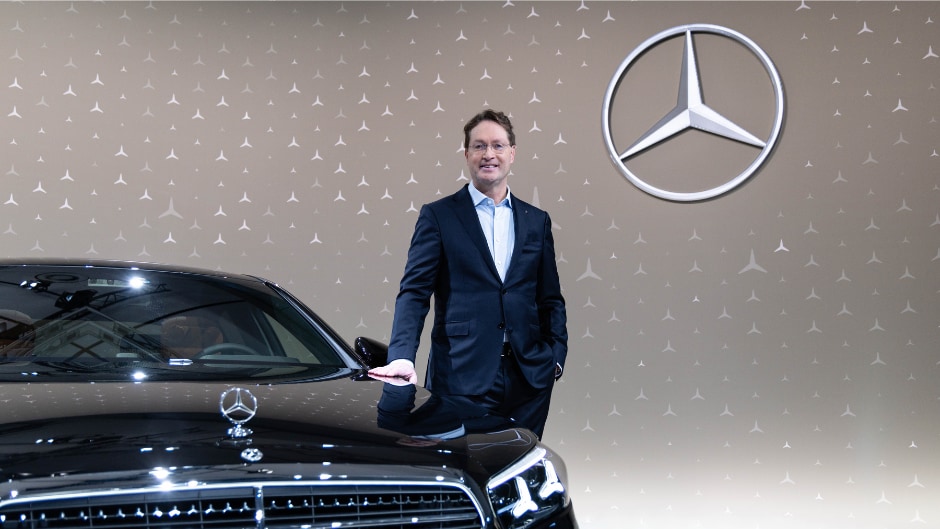
Governments want factories, jobs, and strategic control. Carmakers want scale, efficiency, and the freedom to build a vehicle wherever it makes the most sense.
And if this sounds like a future problem, India would already say, "I told you so!"
We have been living inside this argument for years now.
India is already in the future tense
Look at any major automotive policy announcement in this country, and one theme keeps repeating. Incentives are linked to investment. Import duties fall only if factories rise. Market access is tied to domestic value addition. In simple language, you are welcome to sell cars here, as long as you are willing to build them here.
The electric-vehicle policy has turned this into a formal contract. Reduced duties will apply only alongside billion-rupee commitments, strict timelines, and steadily increasing localisation milestones.
This is not unusual in a developing economy - if anything, it's logical. Industrial growth has always followed the depth of manufacturing. Countries like Japan and Korea did it, while China has clearly perfected it. India is attempting its own version, which is more democratic and negotiated but arguably more chaotic.
So when global executives warn that localisation rules could reshape the industry in 2026, the Indian response is almost philosophical, "Welcome! We saved you a seat."
The uncomfortable truth beneath self-reliance
Here is where the story becomes more interesting and more honest.
For all the talk of domestic manufacturing, the modern electric car is among the most internationally dependent consumer products. Batteries rely on minerals mined across the world, but processing and much of the supply chain are heavily concentrated in China. Power electronics, semiconductors, and rare-earth magnets follow supply chains that ignore national borders completely.
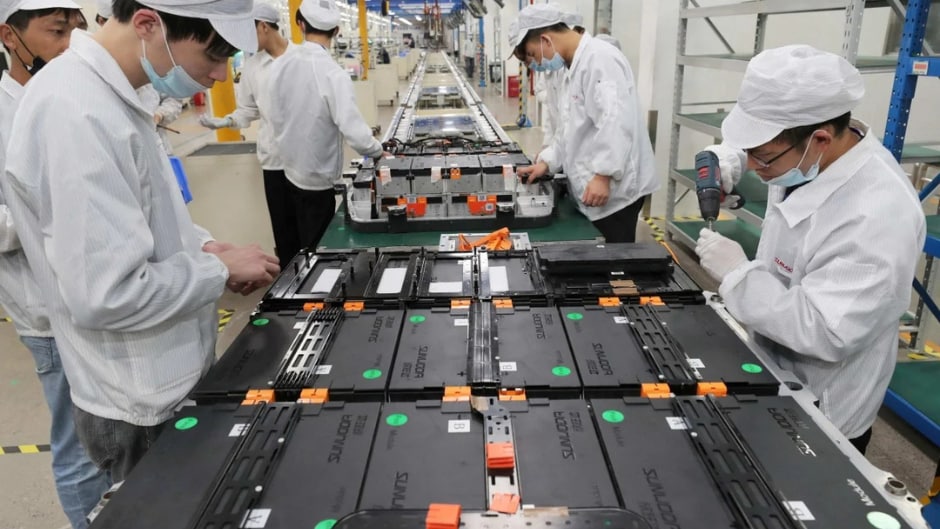
India isn't immune to this. In fact, it exposes the contradiction more clearly than most - we want localisation, but we still import the heart of the electric vehicle.
Some might call this a failure or a lack of foresight. But in reality, it is physics, geology, and economics working together.
So if complete self-reliance is impossible, what exactly are we trying to localise? Jobs, assembly, technology or simply political comfort?
The cost nobody likes to discuss
Protection always carries a price! Sometimes it's hidden, sometimes delayed, but it's always present and payable.
Local manufacturing demands investment, which in turn demands volume. And volume demands pricing discipline or cost competitiveness - which is almost always hard to achieve if you aren't a local player. Currency movement, logistics friction, and imported components still influence pricing - even for vehicles assembled domestically. Localisation reduces exposure, but it does not erase it. Every vehicle manufacturer trying to eat into Maruti Suzuki's pie is an example of this - either living or dead.
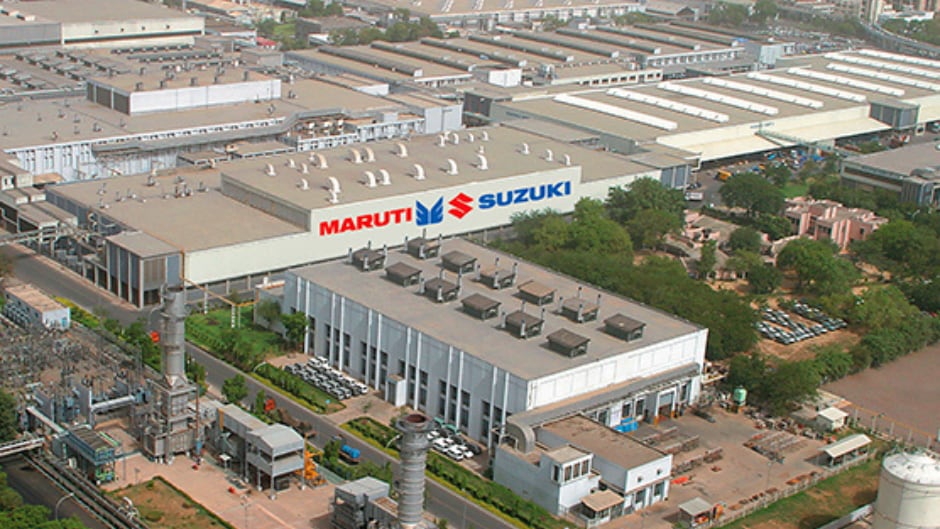
Because the modern automobile is not a national product, instead, it is a global collaboration wearing a local badge - case in point - the Toyota - Maruti Suzuki alliance.
India represents the early chapter of this story. China has already demonstrated what deep localisation can achieve when executed at scale. Europe is rethinking industrial dependence. America is tying incentives to domestic production - and has even tried to lure Mercedes' headquarters across the Atlantic. Though Källenius says he turned down a pitch from Commerce Secretary Howard Lutnick.
The difference now is emotional, not technical. Localisation is no longer just economic policy - it has become strategic identity. Factories are being framed as sovereign. Supply chains are a matter of trade security. Imports show vulnerability. Once policy enters this emotional territory, compromise becomes harder, and industries begin to feel real pressure.
The myth of choosing sides
There is a temptation to treat this debate like a moral choice. Globalisation equals efficiency while localisation equals patriotism. But reality is not that cinematic. Every successful automotive nation blends both. Germany exports relentlessly yet protects key industries. Japan sources globally yet builds domestically. China localises aggressively yet depends on international trade. The winners are not the most protectionist or the most open - they are the ones who achieve balance.
India's challenge is not deciding whether localisation is right. Because that decision is already made, the real challenge is subtler - how far can localisation go before it begins to hurt the very industry it is meant to protect?
What this means for enthusiasts
Policy discussions often feel distant from people who simply love driving. But the connection is direct.
Localisation shapes which cars arrive on the market in the first place. How quickly does technology appear, and when does it actually become reliable? How much does performance cost? How diverse the market remains.
Too little localisation, and the domestic industry never matures. Achieve too much, and choice quietly shrinks, while prices continue to rise. The sweet spot is invisible - which is why governments rarely stop exactly where they should.
This is the most interesting takeaway of all - for years, India has been treated as a unique automotive case. A market that is difficult to tackle due to its high duties, strong domestic players and complex regulations designed to protect them.
But the world seems to be slowly moving in the same direction. What looked like an exception may turn out to be a preview. And that changes how we should read the global conversation. It seems like confirmation that the questions India has been wrestling with are about to become universal.
Strip away the politics, the tariffs, the incentives, and the speeches, and the question remains:
Can a truly global product survive in an increasingly local world? The car industry might be the first to be forced to answer that honestly. Others could follow, because this is no longer just about automobiles. It is about how nations define independence in an age where technology ignores borders. E-commerce, drones, phones, social media apps and even games - there are examples spanning multiple industries.
Localisation promises control. Globalisation promises efficiency. The future will belong to whichever system learns humility first. And if 2026 truly becomes the year this debate explodes worldwide, India will watch with a certain calm familiarity - like someone who has already seen the ending, and knows the story is far more complicated than either side admits.
Related Stories