First Look: 2026 Mercedes-Benz S Class. The W223 S Class gets its midlife update and its refined where it matters
There are very few cars that can afford to evolve without reinventing themselves. The S-Class is one of them. For over half a century, it has carried the weight of being Mercedes-Benz's technological flag-bearer, a role it continues to play even as the industry debates over electrification. This latest update, then, isn't about shouting louder or chasing trends. It's about tightening the screws on a formula that still defines modern luxury.
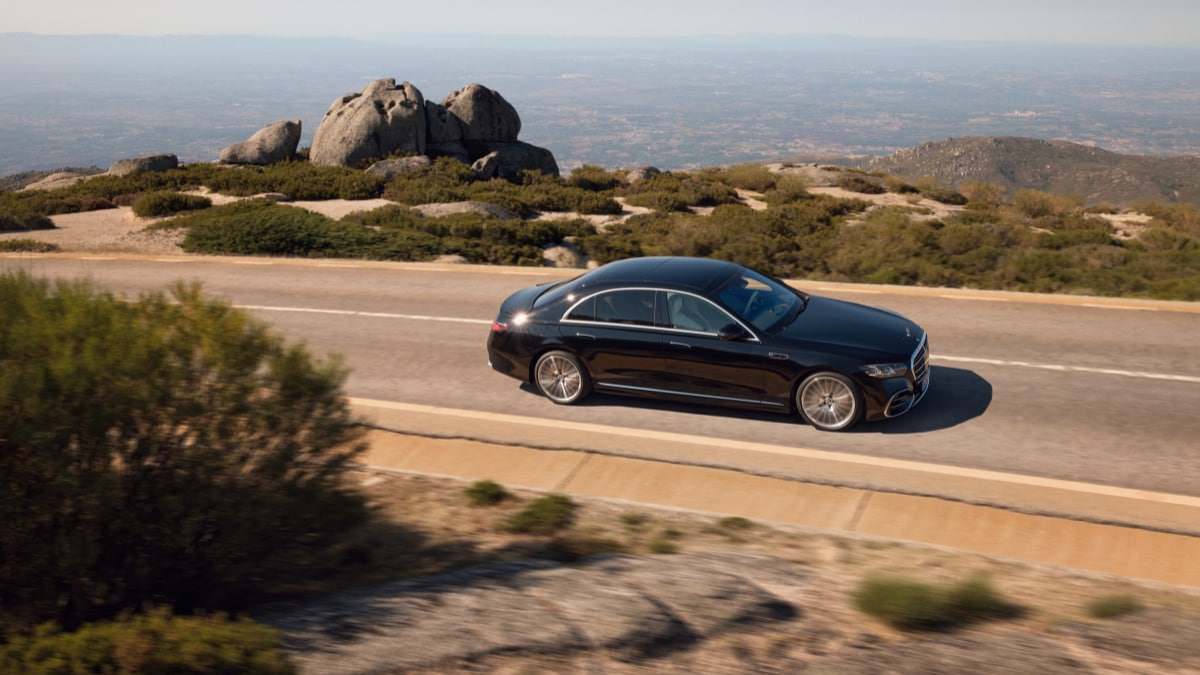
We witnessed the new S-Class at Mercedes-Benz's Stuttgart facility, with the original W116 quietly reminding you where this lineage began, the new S-Class makes its intent clear early on. Mercedes claims this is the most comprehensive update within a single S-Class generation, with more than half the car's components either new or significantly reworked. And while the silhouette remains instantly familiar, the changes run far deeper than surface gloss.
A more assertive presence
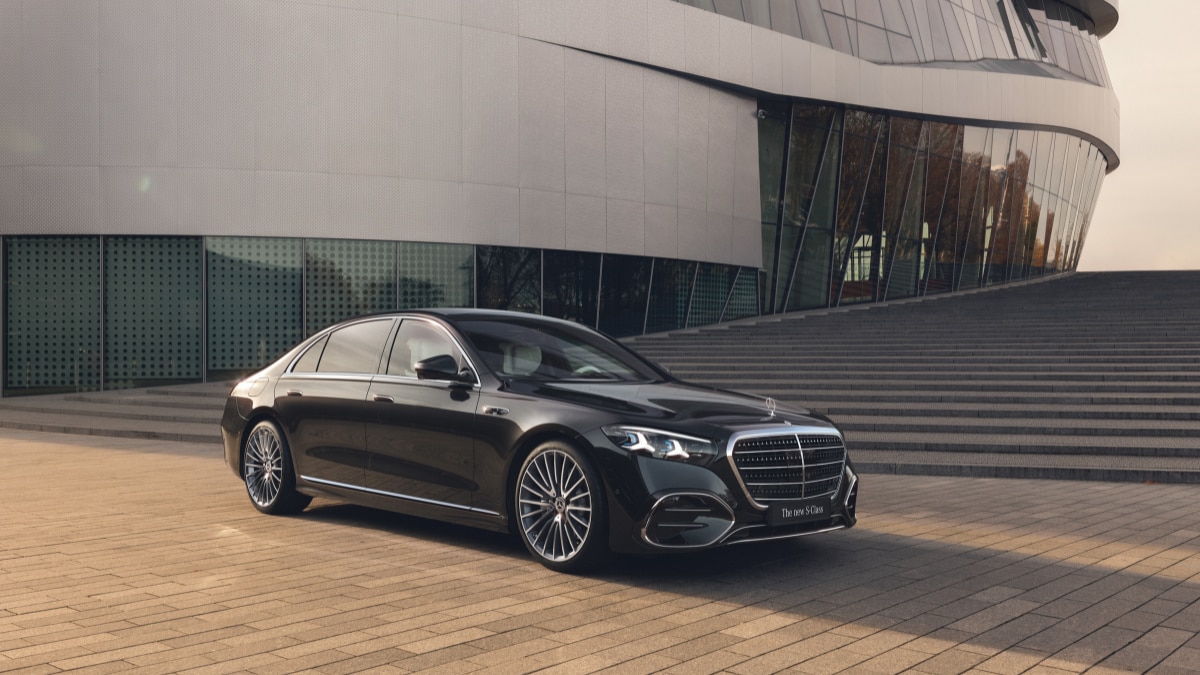
Visually, the S-Class leans into presence rather than restraint. The grille is larger, more detailed, and - depending on specification - now illuminated. Embedded star motifs dominate the front fascia, an unapologetic display of brand confidence that leaves no doubt about what's approaching in your rear-view mirror. It's not subtle, and it's not trying to be. Mercedes wants the S-Class to be identifiable at speed and from a distance, particularly on highways, and this design delivers exactly that.
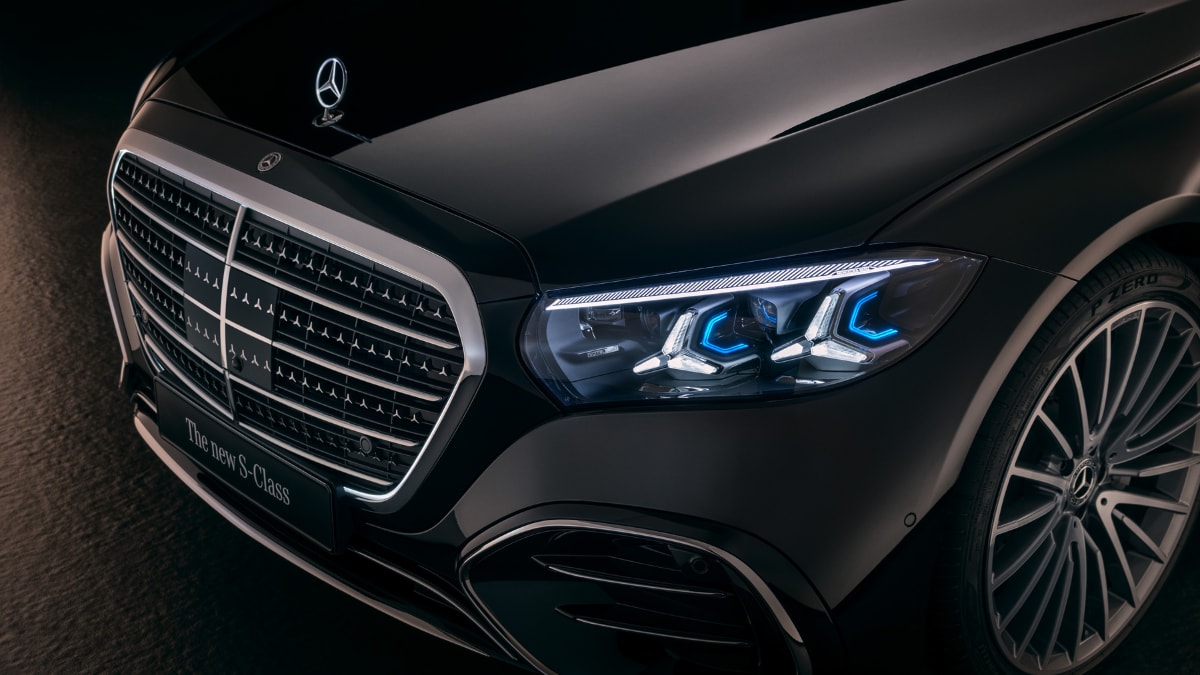
The lighting technology backs up the visual drama with substance. The updated Digital Light system uses a new micro-LED setup that expands the high-resolution illumination field significantly while improving efficiency. The result is better light distribution, longer reach, and more precise adaptive control, especially in low-visibility conditions. At the rear, the now-familiar three-point star motifs return, reinforcing hierarchy within the brand's line-up. It may be a touch theatrical, but it also serves a clear identity function.
A rethink inside
Step inside, and the shift is more philosophical. The vertically oriented touchscreen that once dominated the S-Class cabin has been replaced by a wide, horizontal superscreen layout. It's a decision rooted less in fashion and more in function. Video conferencing, media consumption and shared screen content simply work better in a 16:9 format, and Mercedes has leaned into that logic.
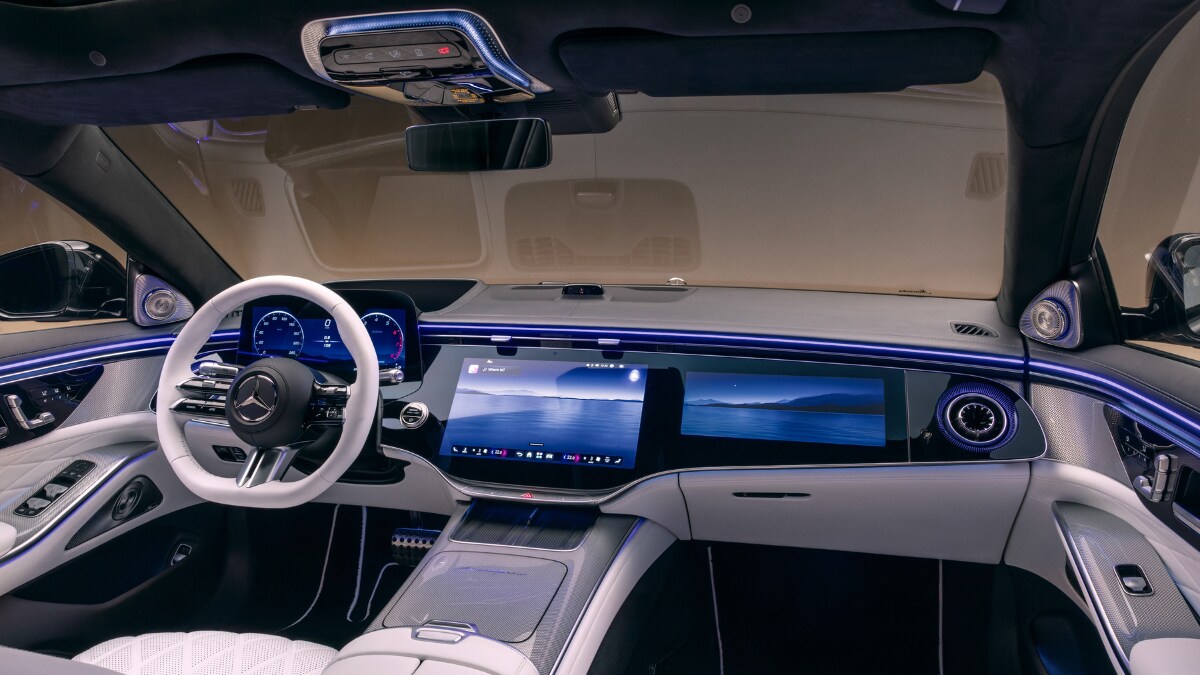
This layout is made possible by MB.OS, Mercedes-Benz's new in-house operating system that replaces the older domain-based electronics with a service-oriented architecture. In simple terms, systems that once worked in silos - infotainment, driver assistance, comfort, and drivetrain - now communicate directly with each other. The benefit isn't just faster responses or cleaner graphics, but deeper personalisation and smoother integration of features across the cabin.
Despite the abundance of screens, the cabin doesn't feel overwhelming. The interface is calmer, the layout more considered, and crucially, distraction is well managed. Even the passenger display is intelligently shielded to ensure it doesn't intrude on the driver's line of sight.
Comfort, engineered to remember you
Mercedes has always excelled at comfort, but the new S-Class pushes further into what might best be described as intelligent indulgence. The active air vents are a perfect example. They can be adjusted manually, of course, but they can also reposition themselves automatically based on user preference and memory settings. Step back into the car after someone else has driven it, select your profile, and even the airflow returns to how you like it.
This is part of a broader Digital Vent Control system, which treats ventilation, air distribution and filtration as a single coordinated unit. Paired with a new electric air filter capable of removing ultra-fine particles, the cabin air can be refreshed rapidly under ideal conditions. It's not a headline feature, but it's exactly the sort of detail S-Class owners notice over time.
The rear remains the throne
As expected, the long-wheelbase S-Class continues to prioritise rear-seat comfort, particularly in the four-seat First-Class configuration. Individual rear screens now feature integrated cameras, enabling video conferencing without external devices. Detachable rear tablets allow passengers to control everything from seating and climate to media and window blinds, while doubling up as pointing devices to avoid awkward reaches.
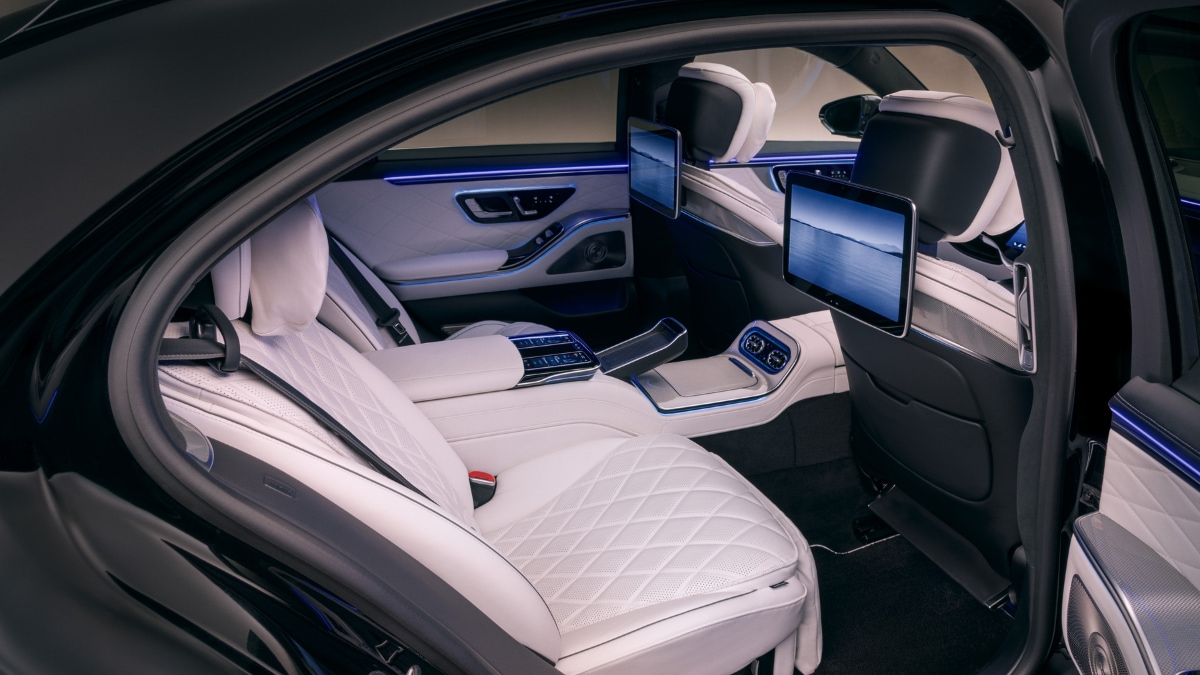
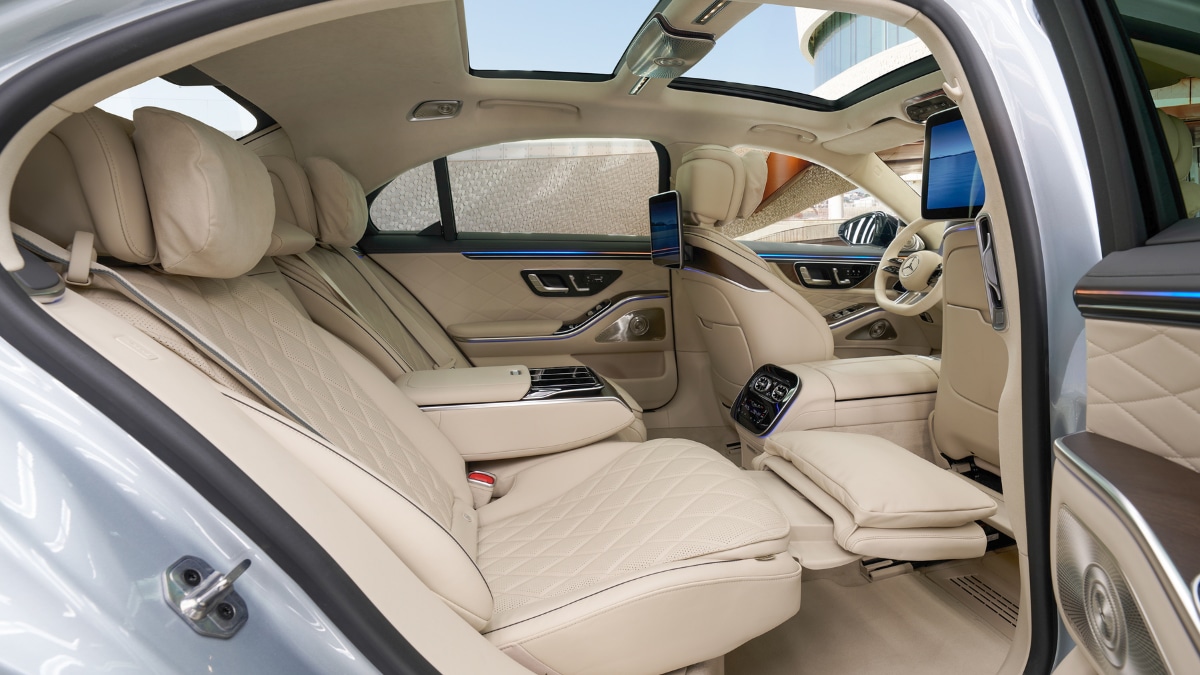
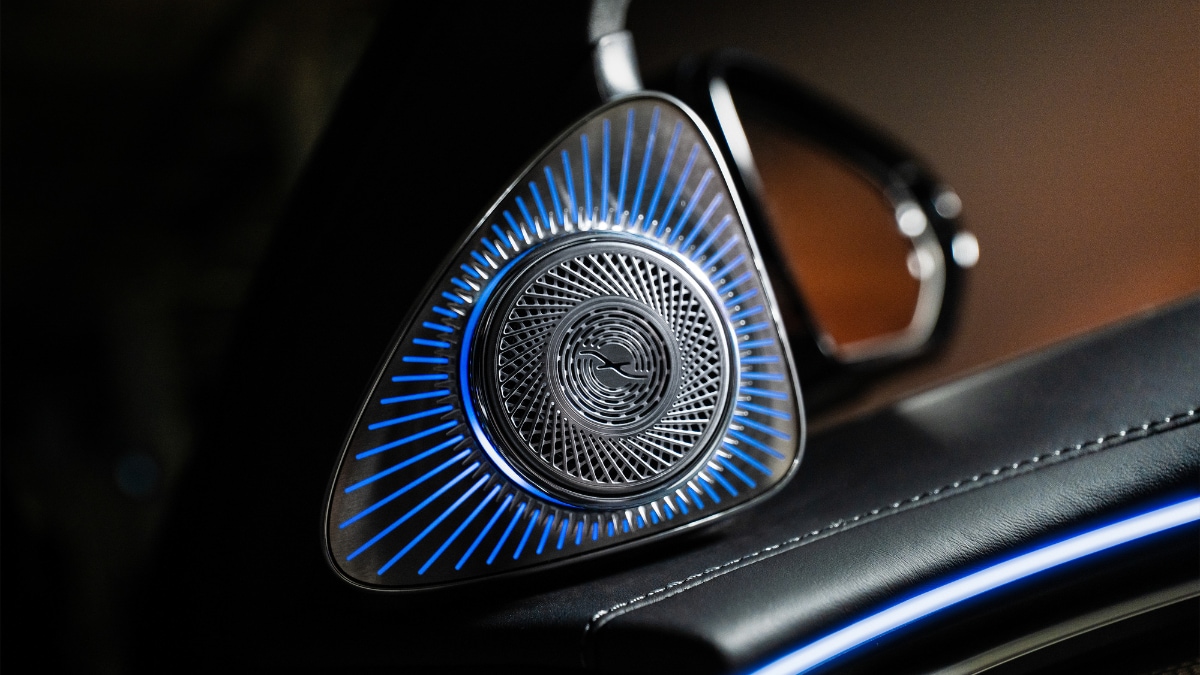
The Burmester 4D audio system adds another layer to the experience. Beyond sound, it introduces physical feedback through the seats when paired with Dolby Atmos content, creating a more immersive environment without resorting to sheer volume. Add in features like a rear refrigerator, extensive massage functions and carefully curated ambient lighting, and the S-Class once again establishes itself as a true mobile lounge.
Powertrains for India
While the global line-up includes plug-in hybrid options, India is unlikely to see them. Instead, the focus here will remain on six-cylinder petrol and diesel engines, all paired with mild-hybrid technology and standard all-wheel drive.
Diesel duties will be handled by the S 350 d and S 450 d, both using the updated OM 656 Evo engine. This introduces an electrically heated catalytic converter designed to improve emissions performance during cold starts and short journeys. Petrol buyers can expect the S 450, S 500 and the range-topping S 580, which retains V8 power for those who still value effortless performance.
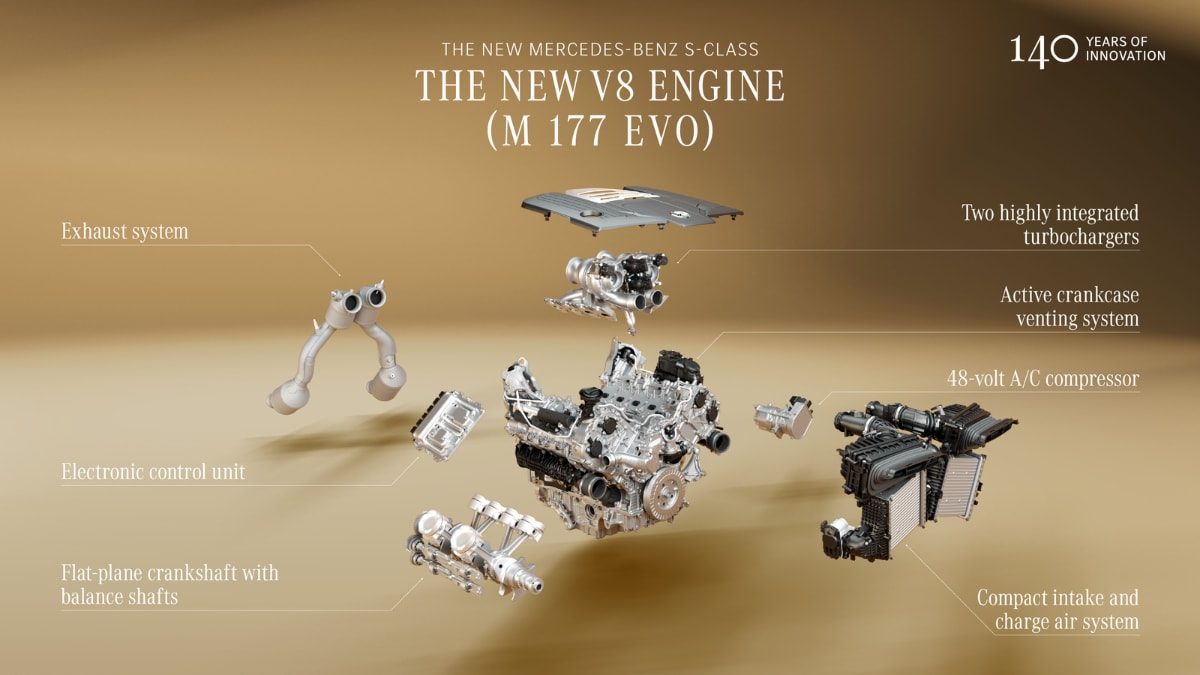
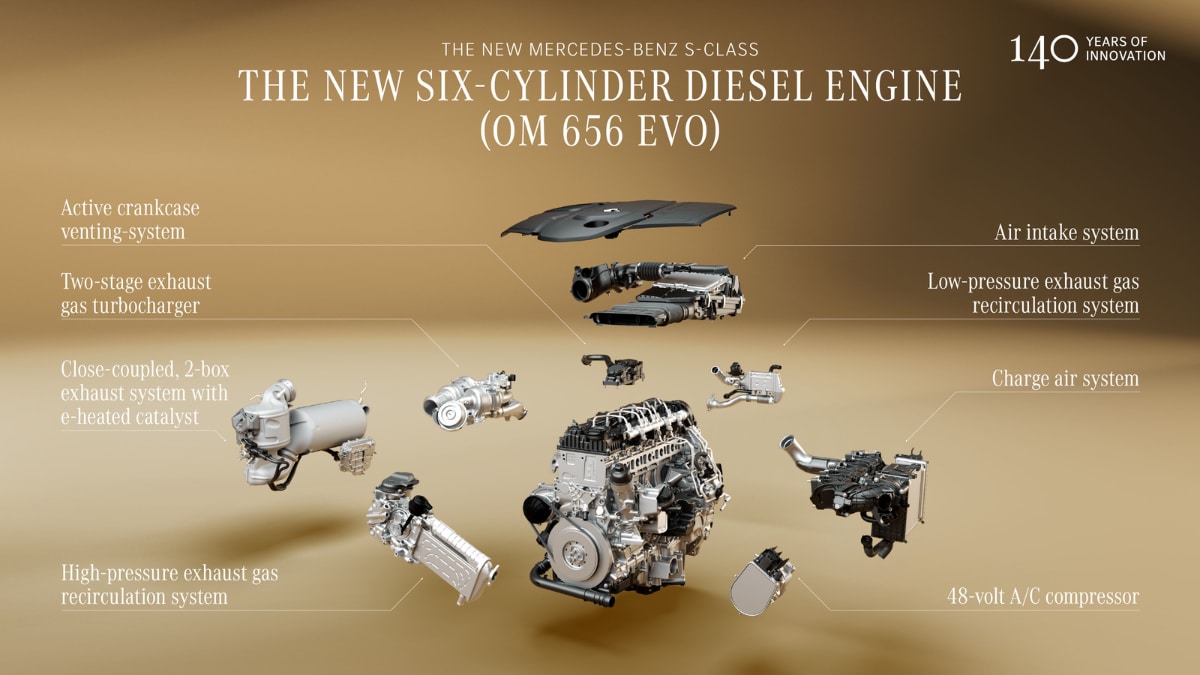
All engines feature a 48-volt integrated starter-generator, enabling smoother stop-start operation, subtle torque assistance during acceleration, and improved efficiency during cruising. It's the kind of technology that works quietly in the background - very much in keeping with the S-Class ethos.
Still the reference point
The 2026 S-Class doesn't attempt to redefine luxury, nor does it need to. Instead, it refines, recalibrates and reinforces its position at the top of the segment. It remains a car designed as much for those who sit in the back as those who drive, blending digital sophistication with traditional Mercedes-Benz values of comfort and composure.
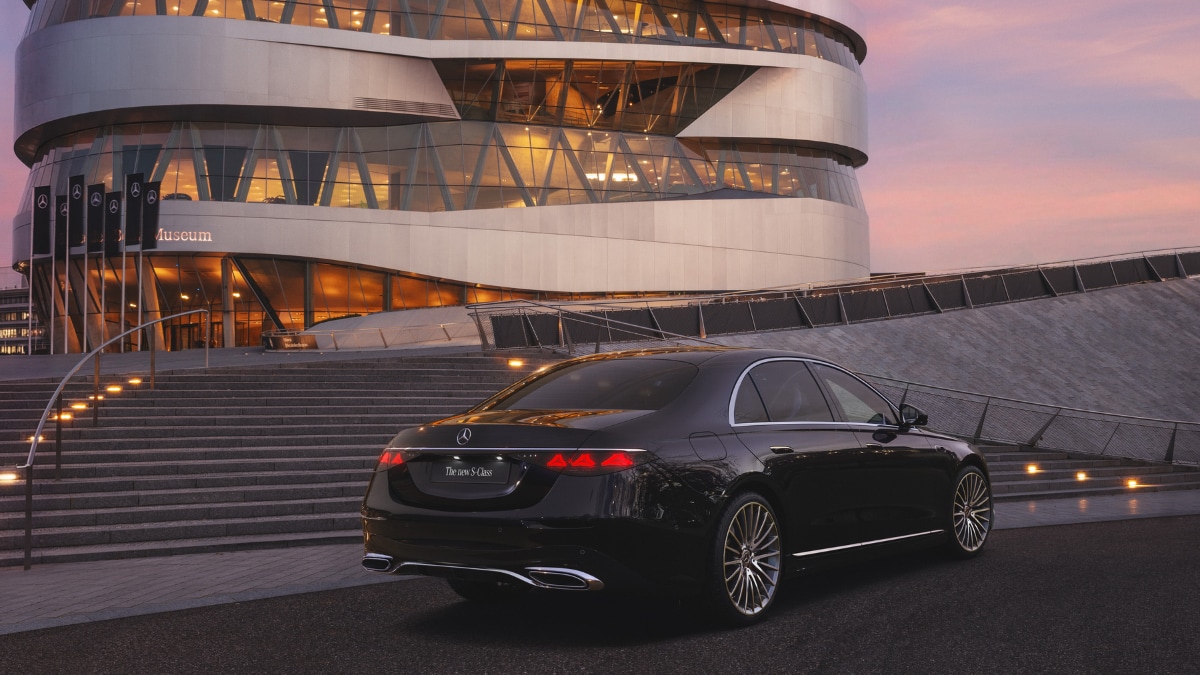
India will see the new S-Class in 2027, and while electrification looms large on the horizon, this update makes one thing clear: the combustion-powered flagship still has plenty to say before it bows out.
Words: Rohit Paradkar
Watch the Full Walkaround Here: https://youtu.be/9poaZ_Hvmfo?si=efCwEt1NLDCRxi8Y
Starts Rs 31.72 Lakhs
2143cc
Automatic
135
300
17.9 Kmpl