
E20 Petrol mandate from today, heres all you need to know
Starting today, April 1, 2025, petrol pumps across India will supply a new type of fuel called E20 petrol, marking an important step in the government's plan to promote cleaner and more sustainable mobility. And what does that mean for vehicle owners?
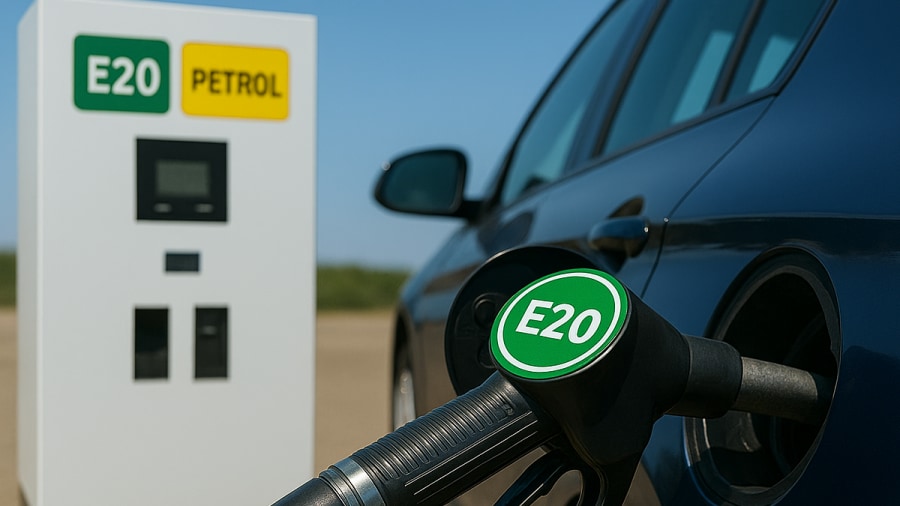
April 2023 was the last date given to manufacturers for E20 compliant engines, so if your vehicle was made after the above-mentioned date, chances are that your vehicle is compliant to E20 fuel. You can also check the manual of the vehicle. On the other hand, BSIV and BSIII vehicles along with those models that were manufactured before April 2023 are likely to experience minor niggles with the engine. The E20 fuel has low energy density and high-octane rating, thus the older engines could be subjected to negligible mileage drop and corrosion, there is an easy fix for that as well, rubber gasket and hoses can be replaced during service routine intervals of 20,000-30,000 km. According to Vahan Parivahan, around 4,12,97,051 BS-III motorcycle/scooter and 4,78,13,140 BS-IV motorcycle/scooter have been sold in the country and similarly, 41,75,022 BS-III motor car and 1,12,53,157 BS-IV motorcar have been sold till date. Now, that makes a grand total of 4,54,72,073 BS-III vehicles and 5,90,66,297 BS-IV vehicles, that will be impacted by the new rule.
Under the new rule, petrol must contain up to 20 percent ethanol and meet a minimum octane rating of 95 RON. The directive was issued earlier by the Ministry of Petroleum and Natural Gas, asking fuel retailers nationwide to adopt the updated standard. The fuel must also follow quality norms set by the Bureau of Indian Standards to ensure consistency across the country. However, authorities have allowed limited temporary exemptions in certain areas if needed.
The shift to E20 fuel is expected to benefit both vehicles and the environment. Ethanol, which is blended with petrol, has a naturally higher-octane rating around 108 RON, compared to regular petrol's 91-92 RON. When mixed at 20 percent, the resulting fuel reaches a higher-octane level, improving engine performance by reducing knocking and ensuring smoother combustion.
Apart from better engine efficiency, the move is also aimed at reducing India's dependence on imported crude oil. Since ethanol is produced locally from crops like sugarcane and maize, the policy is expected to boost domestic agriculture and provide better income opportunities for farmers.
Related Stories