
Rs 50 Cr ARAI ADAS Test City Set To Transform Road Safety With AI
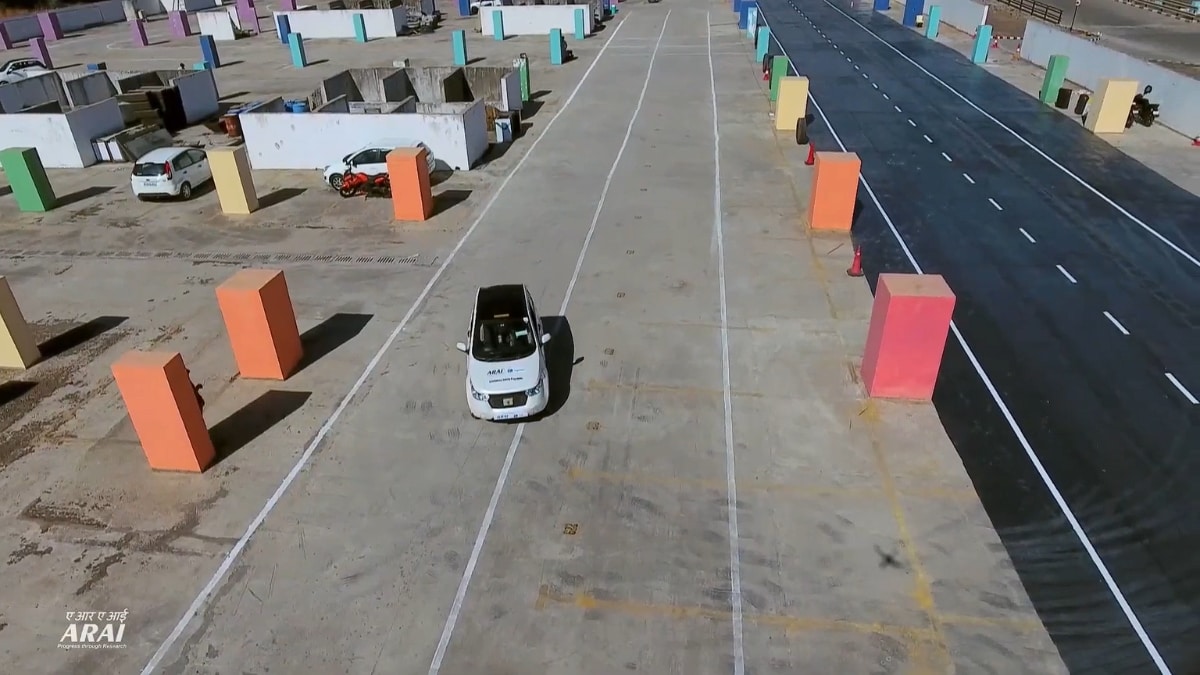
The Automotive Research Association of India (ARAI) is set to inaugurate the country's first dedicated ADAS Test City - a pseudo-urban environment replicating the Indian road network, spread across 20 acres in Takwe, near Talegaon, Pune. A live demonstration of ADAS testing will take place during The ADAS Show on December 12, 2025. The facility has seen a total investment of ?50 crore, with ?12 crore contributed by the Ministry of Heavy Industries under its Capital Goods Scheme, specifically for the procurement of test dummies.
In conversation with Dr. Reji Mathai, Director of ARAI, we gained deeper insights into the vision behind this unique test track.
In conversation with Dr. Reji Mathai, Director of ARAI, we gained deeper insights into the vision behind this unique test track.
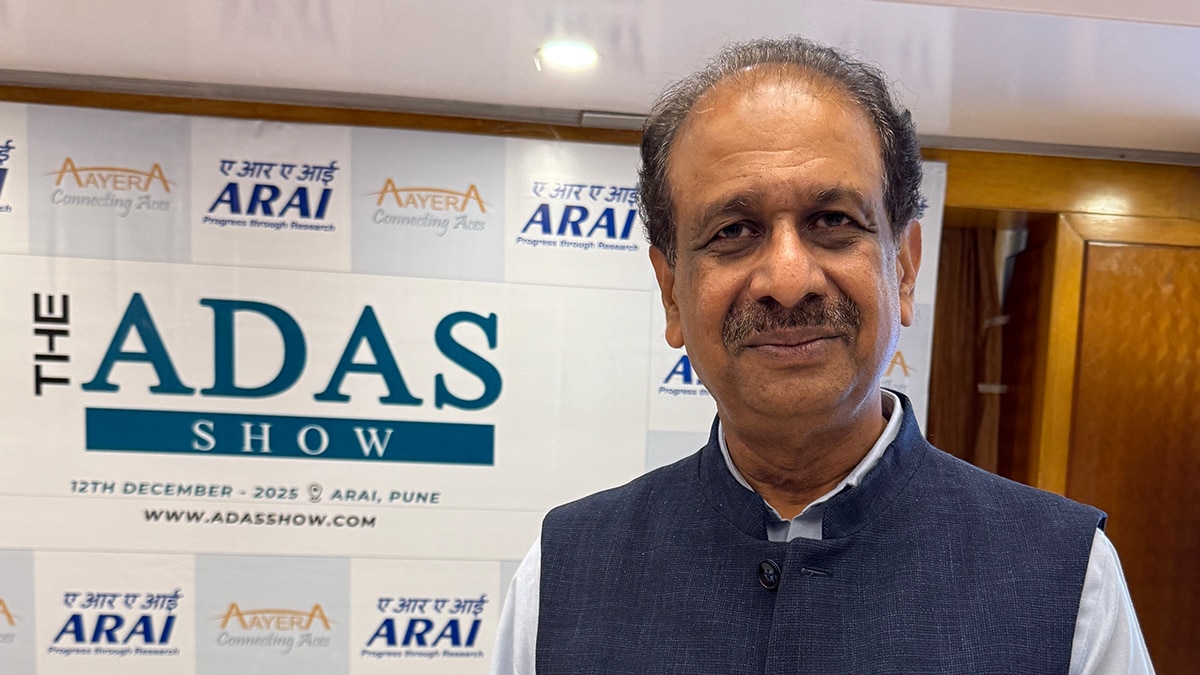
Sohini Dutt: Dr. Mathai, congratulations on the completion of this momentous project, so tell me a little more about the technical specifications of this ADAS testing facility.
Dr. Reji Mathai: So the technical, it has got multiple parts. One is the roads that we have created, that is around in 20 acres of space at Takwe, it's in Pune, and these roads represent multiple types of scenarios in the current city.
So there are straight patches, there are S roads, there are ramps that are created, there is a parking that is created in that. So that is the infra that is created for the roadside. Then there are dummies that we have got, which have platforms in which a human moves, India-specific animals move.
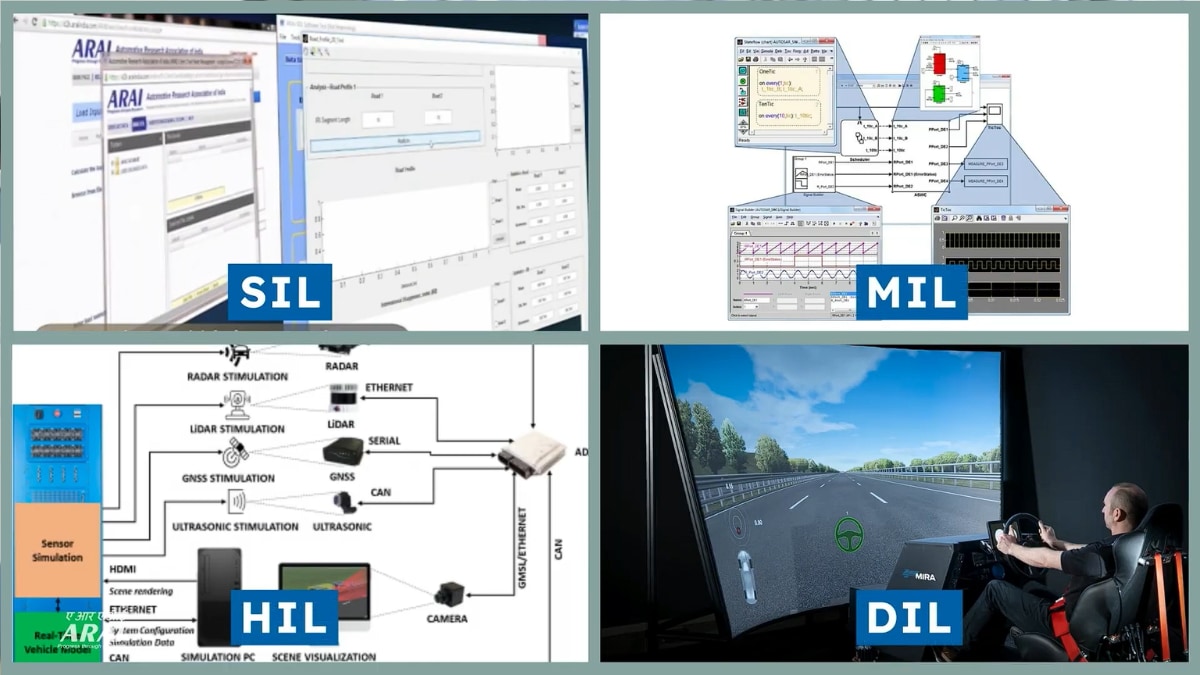
So vehicles that can be detected by the sensors. So all these are being created so that we see how the India-specific scenarios can be simulated over there. Then at the back end, there is a complete software simulation, hardware in loop, machine in loop, systems in place.
So if I look at the totality of it, this is a little complex and we had been planning this for almost for the last five years. And the place we have created now, it's almost ready from December, we are going to put it into use. So we are going to have the event also over there in December.
So vehicles that can be detected by the sensors. So all these are being created so that we see how the India-specific scenarios can be simulated over there. Then at the back end, there is a complete software simulation, hardware in loop, machine in loop, systems in place.
So if I look at the totality of it, this is a little complex and we had been planning this for almost for the last five years. And the place we have created now, it's almost ready from December, we are going to put it into use. So we are going to have the event also over there in December.
Other than that, the software part, already people are using many of them. The testing part they are using at various places where it is available, not very specific India-specific cases. Yes, whatever is available, they are doing.
Dummies, whatever is available, those dummies can be used now. But we are again looking at India-specific cases. So this investment, totally around Rs 50 crores we have put in as of now.
Out of that, around Rs 12 crores, Ministry of Heavy Industries has supported us under their capital goods scheme. And really we are thankful so that we could kickstart many of these activities. And it is very useful for the industry in a big way.
Dummies, whatever is available, those dummies can be used now. But we are again looking at India-specific cases. So this investment, totally around Rs 50 crores we have put in as of now.
Out of that, around Rs 12 crores, Ministry of Heavy Industries has supported us under their capital goods scheme. And really we are thankful so that we could kickstart many of these activities. And it is very useful for the industry in a big way.
Sohini Dutt: Do you have plans to establish more such ADAS test cities across the country in the future?
Dr. Reji Mathai: Currently, we are, because this is very specific to India-specific scenarios. Otherwise, there are big tracks available in the country, where you can test high-speed or standard tests that are as per the regulations.
But the real challenge is on-road, the real city - how it works. So that is where we wanted this. Of course, we may do some augmentation of these tracks in the due course of time, like certain stretch or certain patch where we can accelerate to a higher level within the city-level tracks itself, rather than going to a big track.
But this will not be as big as the tracks that are currently prevailing in the country.
But this will not be as big as the tracks that are currently prevailing in the country.
Sohini Dutt: Do give us a list of the ADAS features that are going to be tested here.
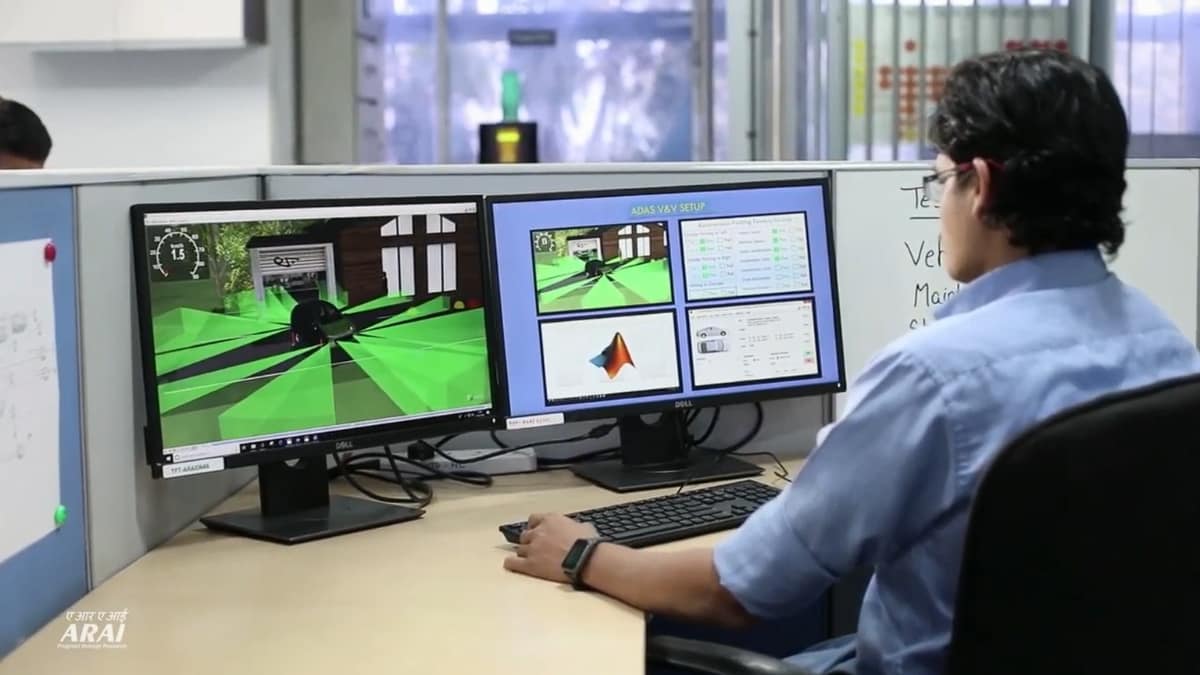
Dr. Reji Mathai: The ADAS features are not only going to be just like the lane keep assist or the warning systems. But beyond that, we want to also see the software that is being used there - how apt is it, how responsive is it?
Plus the sensors that are being used there - can we optimise them? Are these sensors really useful? Tomorrow there is fog, or the light is not so good. So we are going to create such things so that you can have a complete evaluation of the system, rather than just a vehicular-level check.
One feature of the vehicle - can it be done? That sort of a thing. So it is much beyond - a very comprehensive evaluation and development centre that we are creating.
One feature of the vehicle - can it be done? That sort of a thing. So it is much beyond - a very comprehensive evaluation and development centre that we are creating.
Sohini Dutt: Which OEMs have already shown interest in collaborating with ARAI?
Dr. Reji Mathai: So I won't name them, but all major OEMs - we are in talks with them. Many of them have used the services. Many of them are discussing with us how to really see that their features that they have created are a value proposition.
In the end, it has to be a value proposition for the customer. So just to advertise saying that it has been done and then getting some feedback - it puts everything off.
So we have almost all the major OEMs working with us and we have been quite blessed with that, to have them all coming together in such forms, asking us to do different evaluations, understand them, and carry on.
So we have almost all the major OEMs working with us and we have been quite blessed with that, to have them all coming together in such forms, asking us to do different evaluations, understand them, and carry on.
Sohini Dutt: How will this test track support Bharat NCAP's rating methodology?
Dr. Reji Mathai: In future, the Bharat NCAP will be adopting some of these ADAS features - already the discussions are there. So certain features, the simple ones, may be taken now - maybe the lane keep warning systems or the lane keep assist systems.
Are they already in place, or the AEB, as in the braking systems? Some of them may be incorporated in 2.0 - the Bharat NCAP 2.0.
And as and when we evolve further and further, more and more of these features will start coming into the BNCAP. So this is a panel again working on it. They discuss it, they align it globally also, because we should not have a star rating system which is too much ahead and not too much below also.
So we are aligning with the global NCAP and all that to see how the rating systems are matched with it. So as and when, and some India-specific scenarios - you can see those things.
This will be announced - the BNCAP 2.0 - should be announced in 67 months because it has to be implemented from 2027 onwards, if I am not wrong.
And as and when we evolve further and further, more and more of these features will start coming into the BNCAP. So this is a panel again working on it. They discuss it, they align it globally also, because we should not have a star rating system which is too much ahead and not too much below also.
So we are aligning with the global NCAP and all that to see how the rating systems are matched with it. So as and when, and some India-specific scenarios - you can see those things.
This will be announced - the BNCAP 2.0 - should be announced in 67 months because it has to be implemented from 2027 onwards, if I am not wrong.
Sohini Dutt: Right. What type of AI tech is going to be used at the track to enhance the precision of the testing?
Dr. Reji Mathai: The AI tech will come at the back end of it. Once the data is generated - how to see these analyses are done in a better way.
So the software is where the AI is going to be built in. The track will have sensors and sign boards, signs and all that. Now the AI tech starts working at the software level - how to decipher it, how fast to give that signal, whether it is correct - all those things will come into the software part.
So we will be looking into the standardised packages which are already working, like signage should be like this, the road should be like this.
But if somebody wants to do a study saying that no, no, no, the roads - I don't have the lane marking of, say, 5-inch width, I have a lane marking of 3-inch - will it suffice for me in certain places? Right. Are there brakes to be given?
That is understanding that when it is a solid line, you should not cross it; when it is a broken line, you can change it. So there is understanding in this.
So when you do that without giving the signal, the turning, there is a blinker that starts.
Okay, you are done. So is it possible that it deciphers it? Okay, there is a break, so he can turn, and without a signal - okay, there is a small warning - and if it is a solid line, you should get a big warning. Right.
So these things are going to be built into the software and into the system. These are where we really have to work a lot together in the country. These are already existing in many parts, but we are also adopting it.
So we will be looking into the standardised packages which are already working, like signage should be like this, the road should be like this.
But if somebody wants to do a study saying that no, no, no, the roads - I don't have the lane marking of, say, 5-inch width, I have a lane marking of 3-inch - will it suffice for me in certain places? Right. Are there brakes to be given?
That is understanding that when it is a solid line, you should not cross it; when it is a broken line, you can change it. So there is understanding in this.
So when you do that without giving the signal, the turning, there is a blinker that starts.
Okay, you are done. So is it possible that it deciphers it? Okay, there is a break, so he can turn, and without a signal - okay, there is a small warning - and if it is a solid line, you should get a big warning. Right.
So these things are going to be built into the software and into the system. These are where we really have to work a lot together in the country. These are already existing in many parts, but we are also adopting it.
Sohini Dutt: Finally, I have to ask you - the latest road safety report submitted by MoRTH records highest fatalities as? pedestrians & two-wheel riders in India. What will be looked upon at this particular test facility to help in that respect?

Dr. Reji Mathai: So this has been the trend, and recently somebody was telling me that wherever countries have more of two-wheelers, this is the same challenge. Yeah.
Initially we felt that it is more of an India-specific issue, but wherever two-wheelers are there, the fatalities or the percentages of two-wheelers and people are the higher ones.
So one aspect is - we have to look into certain sensitisation or certain assist systems in the two-wheelers also. These are to be discussed and taken forward.
So globally, because two-wheelers are not a major concern, they have not been much talked about. The four-wheelers and all are what have been discussed upon; regulations have been framed for them. But for two-wheelers, not much has been done.
So India is in a good place to take leadership, and we have to take that leadership. And in the coming days, we will be seeing that happening - how the rider assist systems can be taken up.
What level of autonomy or what level of controls can be done by some automation - these are areas where we have to work together. The industry has to come together.
So one aspect is - we have to look into certain sensitisation or certain assist systems in the two-wheelers also. These are to be discussed and taken forward.
So globally, because two-wheelers are not a major concern, they have not been much talked about. The four-wheelers and all are what have been discussed upon; regulations have been framed for them. But for two-wheelers, not much has been done.
So India is in a good place to take leadership, and we have to take that leadership. And in the coming days, we will be seeing that happening - how the rider assist systems can be taken up.
What level of autonomy or what level of controls can be done by some automation - these are areas where we have to work together. The industry has to come together.
Sohini Dutt: All right, thank you so much for your time. We are really looking forward to checking out the show in December and seeing the test track as well.
Related Stories



Advertisement
Top Stories
Advertisement
Advertisement

