
Straight-piped: The E20 question
I'll be honest, like many of you, this outcry over the E20 fuel rollout has crept up on me unexpectedly. That probably sums up the gist of this issue. This policy of raising the ethanol content in fuel to 20 per cent was meant to be rolled out fully by 2030, but this change seems to have been fast tracked significantly. The effect has been that many users have now been left somewhat in the lurch, with their cars not being compatible with this. For those of you who have bought cars built after April 2023, this may not be of much concern, but as it stands, the mandated life cycle of a petrol car in India is 15 years.
Yes, it is known that cars not engineered for E20 fuel will lose efficiency by up to 6 percent, and anecdotal evidence suggests this could be much greater. In non-compliant cars, it can also lead to corrosion in the fuel systems and degradation of fuel seals and gaskets. This happens because ethanol, while having similar properties as fuel, also absorbs water. So it stores energy like fuel, about 30 percent less, is a hydrocarbon, is flammable and is denser than water. In fact, it has a much higher octane of 108, against the 91 octane rating of regular BSVI fuel in India, which should make all the enthusiasts among you quite happy. These are genuine concerns, but as with everything on social media, this problem seems to have been amplified. There are some measures within your control that you can take to mitigate risk.
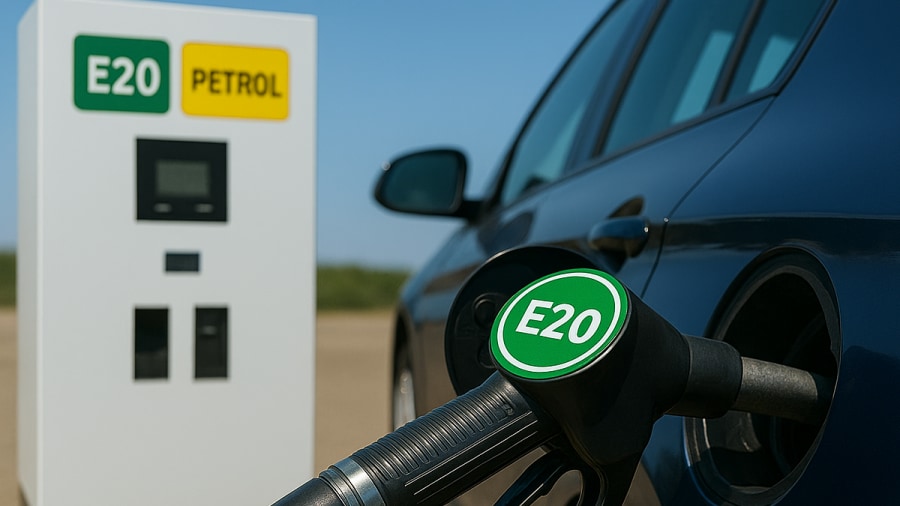
You can start using fuel additives. These can be your quickest and most reliable solution to keep your older car running properly for longer. You can also make doubly sure that you close your fuel lid tightly to stop water being absorbed. Changing components to E20 spec could be a costly affair, although this could be a good intervention the government could make with car manufacturers to support owners of non-compliant cars. It could also direct insurance and car firms to retroactively include damage from the new fuel type in insurance claims. These will be costly interventions, but necessary to tide over affected consumers.
Make no mistake, this switch to E20 fuel is a good thing. Ethanol is produced from sugarcane molasses, wheat, corn or rice waste. There is processing of course, but nowhere near as much as using petrol. The government says E20 reduces tailpipe carbon emissions by about 30 percent, and sugarcane-based ethanol produces over 80 percent less emissions than petrol. This gain largely comes from the plants that are used to process this, as they absorb carbon dioxide in their life cycle.
In the current context, this gives India huge energy freedom and forex savings. Using E20 fuel will reduce India's crude oil demand by up to 245 lakh metric tonnes and save Rs 43,000 crore in forex. This could be a great opportunity to redirect investment in infrastructure, road safety and lower taxes on vehicles. So while the agriculture sector will see a boost, an opportunity to grow India's automotive landscape also presents itself.
Related Stories