The Piyush Pandey Effect on Indian Motoring. From Luna to Pulsar this man made metal speak!
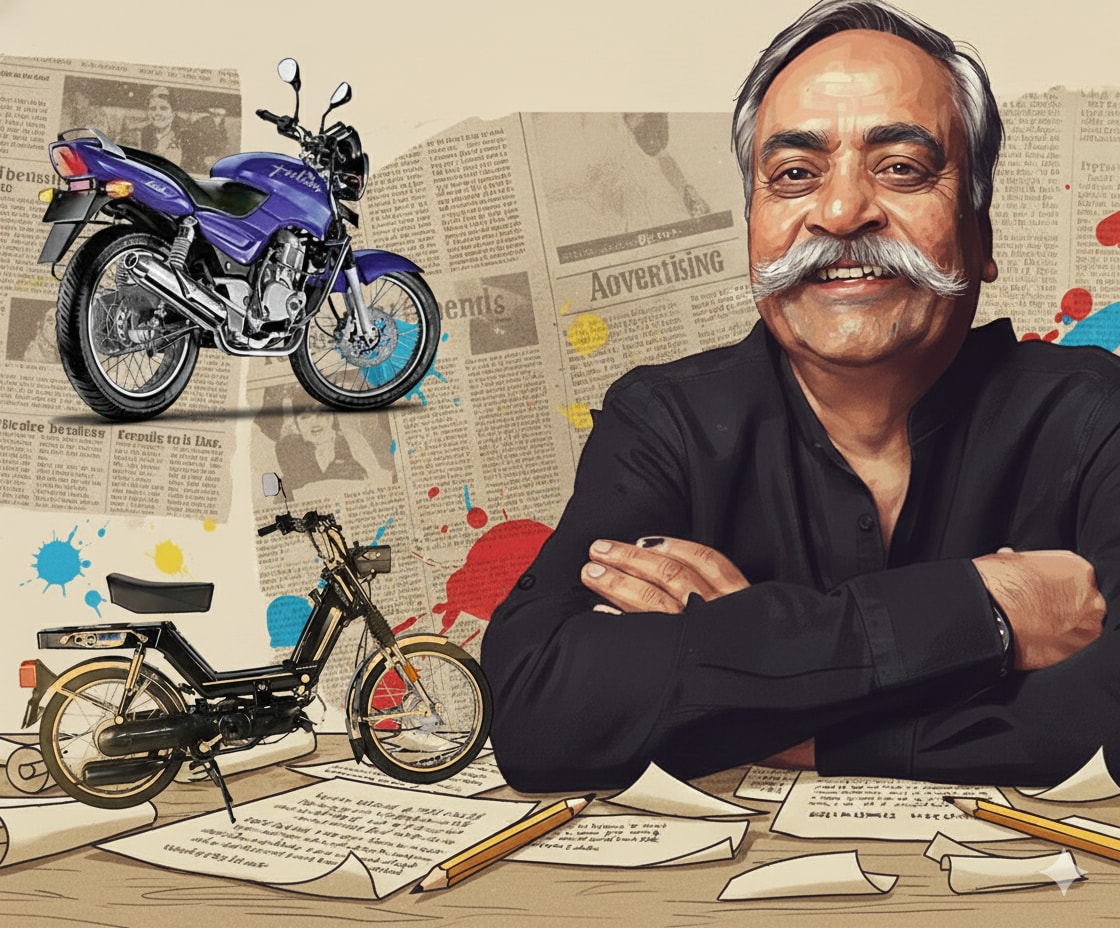
Before specs and hashtags dominated, one man - fountain pen in hand, moustache in place - gave Indian motoring its voice. Piyush Pandey, the adman who made bikes feel human, mopeds mischievous, and brand campaigns unforgettable, passed away today. Yet the words he crafted still idle somewhere in our collective memory, ready to rev the moment you hear them.
"Chal meri Luna."
"It's a Boy!"
"Definitely Male."
Those weren't just slogans. They were ignition switches for entire generations.
In the early 2000s, the Indian motorcycle market was stuck in second gear. Four-strokes had taken over. Mileage was everything. Machismo was missing, and design was an afterthought. Bajaj was still about scooters; the friendly, family-oriented kind that took the kids to school. Then came the Pulsar, and with it, Piyush Pandey's two-stroke symphony of words.
"It's a Boy!" wasn't just cheeky, it was revolutionary. It humanised a machine, made a motorcycle's birth sound like a rite of passage. And when the dust settled came the knockout line - "Definitely Male." A line that sparked aspiration and made college boys like me ogle at the motorcycle's design even before picking up the brochure or the spec sheet.
Motorcycles stopped being mere transport - they became identity. Each ad, print, and jingle pulsed with swagger. Pandey transformed specs into statements. The Pulsar offered more than performance; it sold self-worth to a new generation of riders.
But Pandey's magic wasn't limited to the young and restless. Decades before the Pulsar, his words had already defined mobility for middle-class India.
"Chal meri Luna" went beyond being an ad line - it became a cultural chorus. It made a humble moped feel like a loyal companion.
I remember yelling that slogan from the backseat every time the traffic light turned green - my earliest attempt, perhaps, at riding shotgun with advertising.
And while many remember "Humara Bajaj" as the anthem of the era, the line itself predates Pandey's work. Yet it was he who later wrote a poignant successor - "Hamara Kal" - the line that launched Bajaj's Chetak EV campaign. From "our scooter" to "our tomorrow", Pandey's pen had, quite literally, travelled from petrol to electrons.
That was the thing about Pandey's writing - it didn't just sell machines; it sold belonging. His words evolved with the times, carrying the same warmth into a new, electric age.
The Man Behind the Words
Pandey didn't talk down to the consumer; he spoke with them - in a language that was witty, emotional, and unmistakably Indian. He relied on heart and humour. He understood that Indian buyers don't just purchase mobility; they purchase meaning. Whether it was a moped or a motorcycle, his words gave metal a soul.
In hindsight, his campaigns shaped not just sales charts but also the vocabulary of motoring journalism, advertising, and even everyday conversation. Think about it - we still use "Pulsar generation" to describe an era. That's the mark of advertising that transcends marketing.
In an industry obsessed with numbers, Pandey proved that words - when chosen right - can move more than machines. They can move minds, and sometimes, entire generations.
Rest in peace, Pandey ji.
Related Stories