Balancing the Force At the apex
Three Days at the California Superbike School, MMRT
The story really begins with a truck.
A transport rolled into the Madras Motor Race Track carrying a set of machines that would define the next three days. Aprilia shipped across RS 457 GP Replica bikes from its Baramati plant, for us, to the track in Chennai. Fresh, sharp, and purposeful, they looked like scaled down superbikes draped in factory racing team intent.
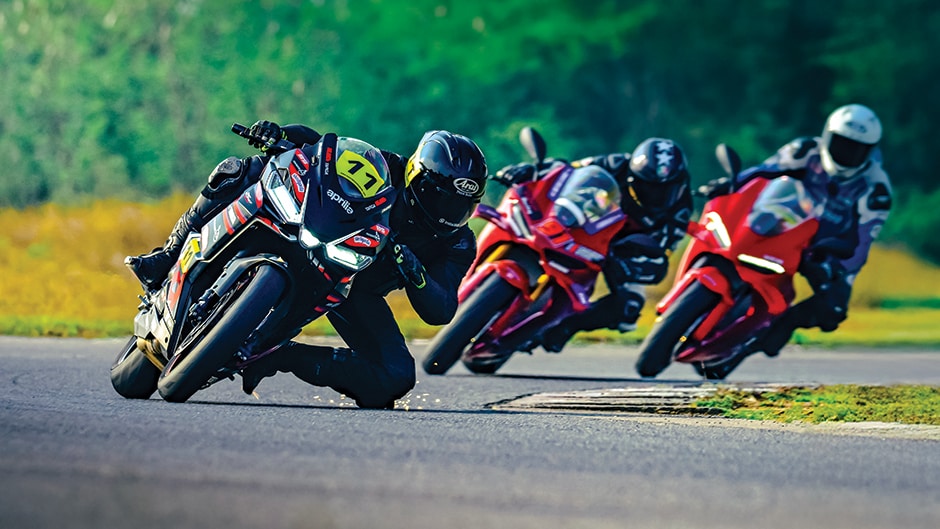
On paper, the RS 457 makes little over to 47 PS from its parallel twin engine. It features ride by wire throttle, a quickshifter for clutchless upshifts, a lightweight aluminum frame, and suspension that feels far more serious than its displacement might suggest. The GP Replica livery adds visual aggression, but what mattered more is how, not what the motorcycle communicates.
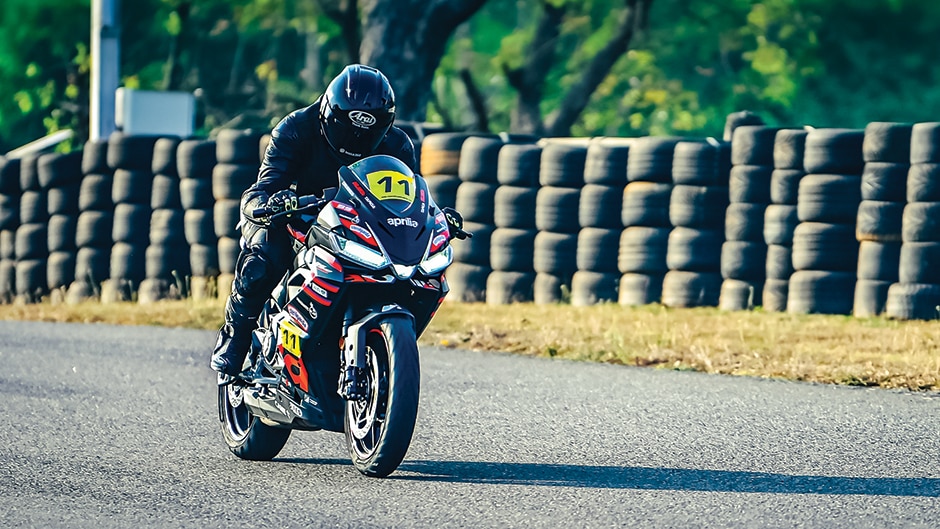
Earlier versions had faced murmurs about braking feel and engine timing inconsistencies. The machine waiting for us at MMRT felt nothing like that. The throttle response was clean. The braking was predictable. The gear lever action was crisp and stable. The quickshifter worked seamlessly. Over three days, the bike built trust in the way a good motorcycle should, gradually and honestly.
By the end of Day Three, I sent a message to the PR team that simply read, this motorcycle is a hoot. That was not flattery. It was a conclusion.
Day One and the Weak Right Hand
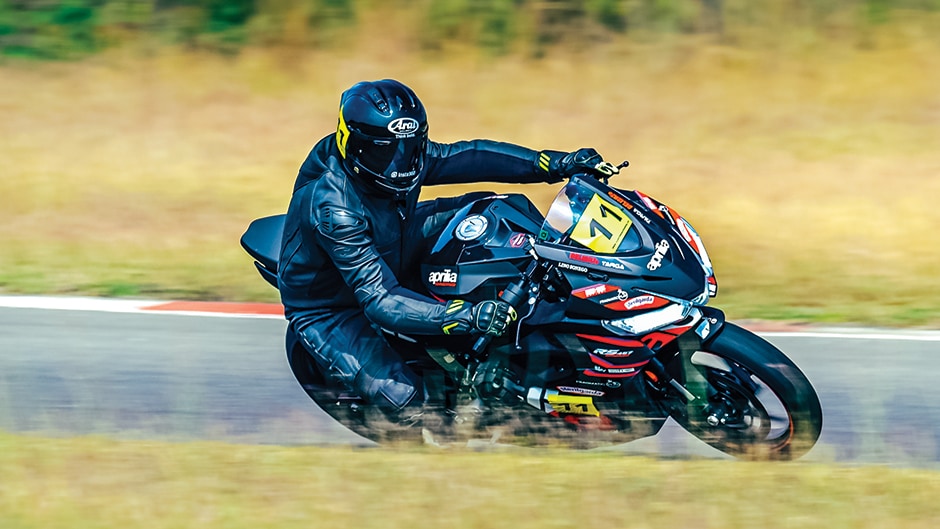
Every rider has a corner that reveals them.
For me, that corner used to be C5 at MMRT.
Two years ago, it exposed hesitation. I was quick in some sections, but that specific right hander felt compromised. I carried tension into it. I leaned the motorcycle more than necessary. I entered lean in two stages instead of one committed arc. I was trying to force speed rather than flow with it.
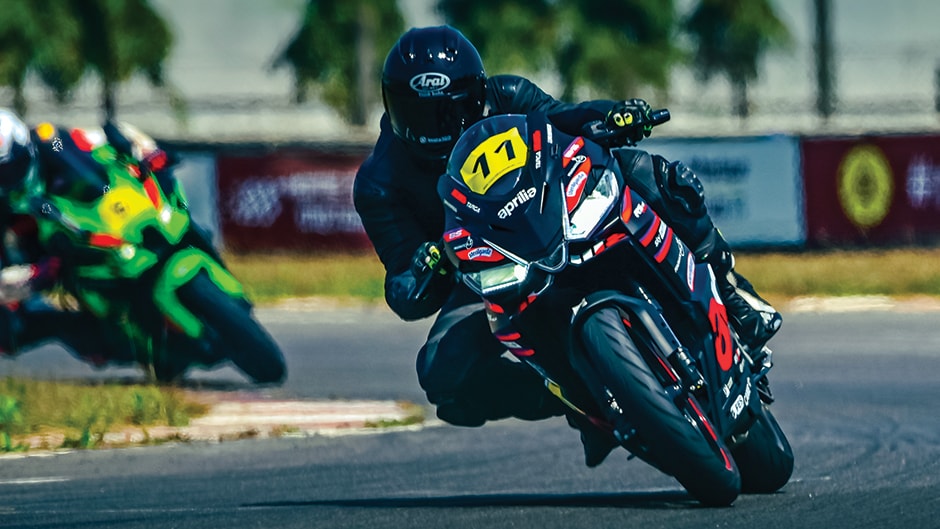
The bias was not random. Growing up riding in India, you build a subconscious preference for left handers. On public roads, you do not attack right-handers with the same freedom. There is oncoming traffic. There is risk. There is instinctive caution. Over time, that caution embeds itself in your riding DNA.
When I arrived at the California Superbike School this year, I knew the right side needed redemption.
Day one was not glamorous. It was technical and humbling. The focus was on fundamentals. Throttle discipline. Smoothness. Removing unnecessary inputs. No theatrics, no heroics.
I was quick. In fact, I was the fastest in my Yellow Group on the opening day. But speed without precision is fragile. My instructor spotted it immediately. I was leaning too much. I was impatient. My transitions were not as clean as they could be.
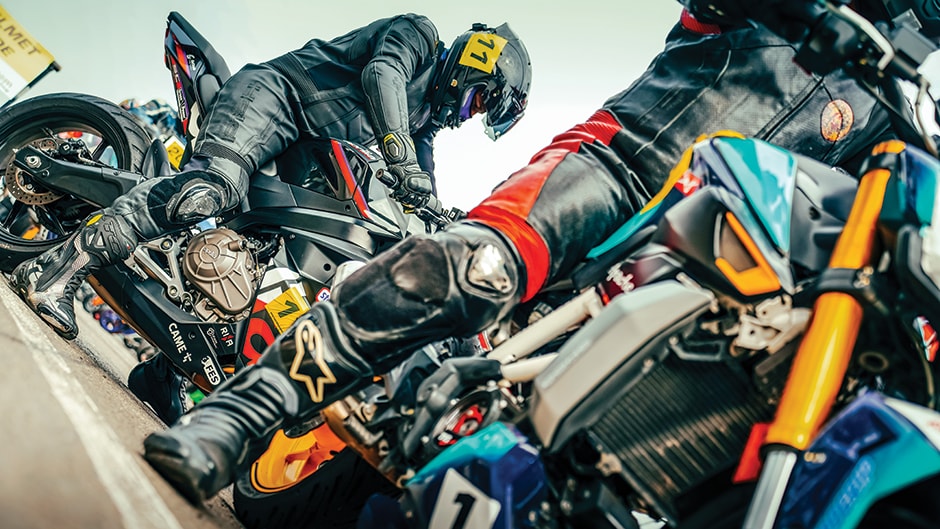
We sat down between sessions and dissected the problem. Instead of rolling into lean in two stages, I needed to commit once. Instead of over leaning the bike, I needed to trust the arc. Instead of rushing throttle pickup, I needed patience.
The RS 457 made that process easier. Its chassis felt neutral. It did not punish small mistakes. When I rolled the throttle smoothly, the bike rewarded me with stability. When I rushed, it gently reminded me that smoothness is speed.
By the end of Day One, something had shifted. The right side no longer felt like a negotiation. It felt manageable.
Day Two and the Quiet Mind
If Day one stripped ego, day two rewired vision.
Riding fast is not about bravery. It is about clarity. The clearer your mind, the quieter your inputs. The quieter your inputs, the cleaner the motorcycle moves.
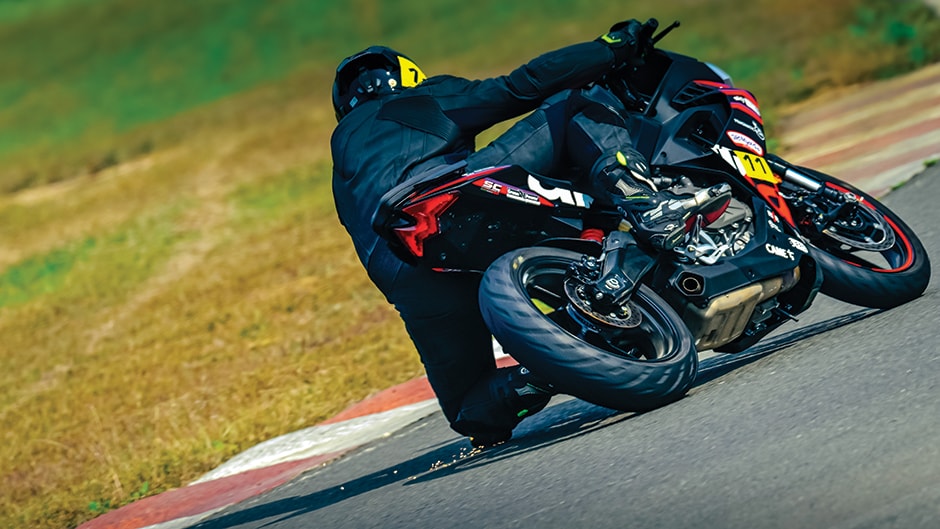
On day two, the corners that once felt rushed began to slow down in my head. Corners 4, 5, 6, 8 and 12 at MMRT started to flow together rather than feel like isolated obstacles. The track stopped being reactive and started being deliberate.
The RS 457 came alive in this phase. Its light front end and balanced geometry encouraged me to carry corner speed. The quickshifter allowed uninterrupted drive. The braking felt planted as I approached tighter sections. The bike stood up smoothly on exit and rewarded early throttle confidence.
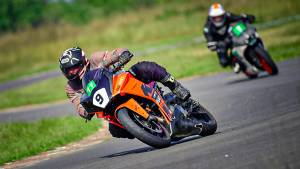
This was the day I got my right knee down for the first time.
It was not planned. It was not forced. It happened because the arc was right, the body position was correct, and the throttle application was now clean. For years, my left side had felt dominant. I could hang off confidently. I could trust the grip. The right side always carried a whisper of doubt.
That whisper disappeared.
It was not about scraping a knee. It was about symmetry. For the first time in my riding life, my right handers felt as strong as my left handers.
The most surprising detail was not the knee down moment. It was the lap time. I was circulating faster than I had in previous years when I attended the school on a litre class motorcycle. That realisation hit hard. Displacement had taken a back seat to discipline.
Confidence built quickly, but this time it was different. It was not reckless. It was informed. I could see the reference points. I could sense when the front loaded up. I could feel when the rear squatted under acceleration. The bike and I were communicating rather than arguing.
That night, the exhaustion felt satisfying. We had been unloading motorcycles from trucks just days earlier. Now we were pushing them to their limits, burning through calories earned from generous South Indian meals between sessions. Everything becomes pure, with intent.
Day Three and Maturity
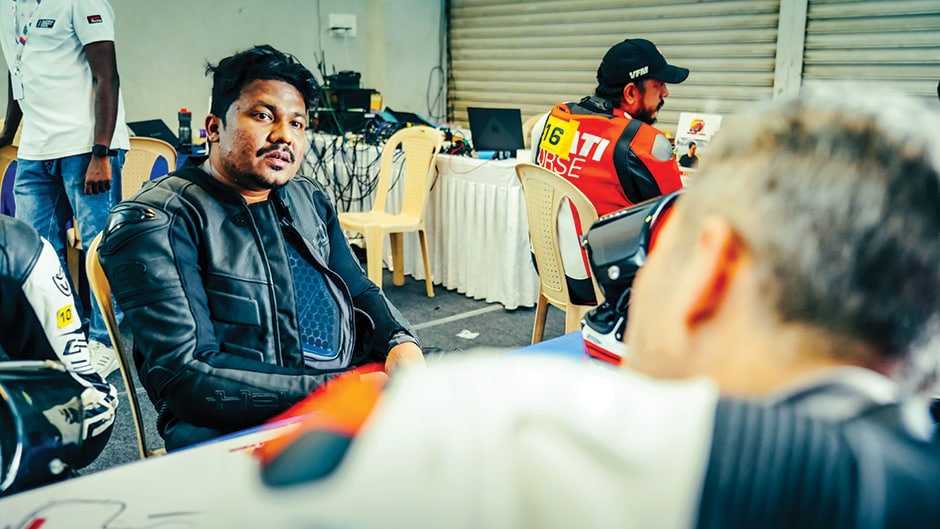
Day Three is where everything either consolidates or collapses.
For me, it consolidated.
The emphasis shifted to body positioning. Earlier setup. Cleaner transitions. Spine alignment parallel to the motorcycle during lean. Less stiffness in the upper body. More efficiency in movement.
In the past, I would lean the bike aggressively while my body lagged behind. This time, I prepared early. By the time the corner arrived, I was already in position. That single change reduced drama and increased control.
The right handers that once intimidated me were now corners I attacked with intent. Not recklessly. Intentionally.
There is a crucial difference between taking bigger risks and understanding bigger risks. Earlier, pushing harder meant uncertainty. Now, pushing harder meant clarity. I understood where the limit was approaching. I understood how the bike would react. That knowledge removed fear.
The RS 457 felt like a partner by this point. I trusted its braking stability. I trusted its mid corner composure. I trusted that when I asked for drive on the exits, it would respond cleanly. The quickshifter allowed me to stay focused on line rather than clutch work. The motorcycle never felt overwhelmed.
At the end of the final session, there was a sense of completion. The full circle had been drawn. Setup, turn in, mid corner control, exit drive. The sequence flowed without conscious effort.
I arrived fast. I left refined.
Beyond Technique
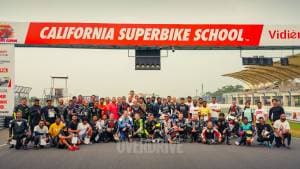
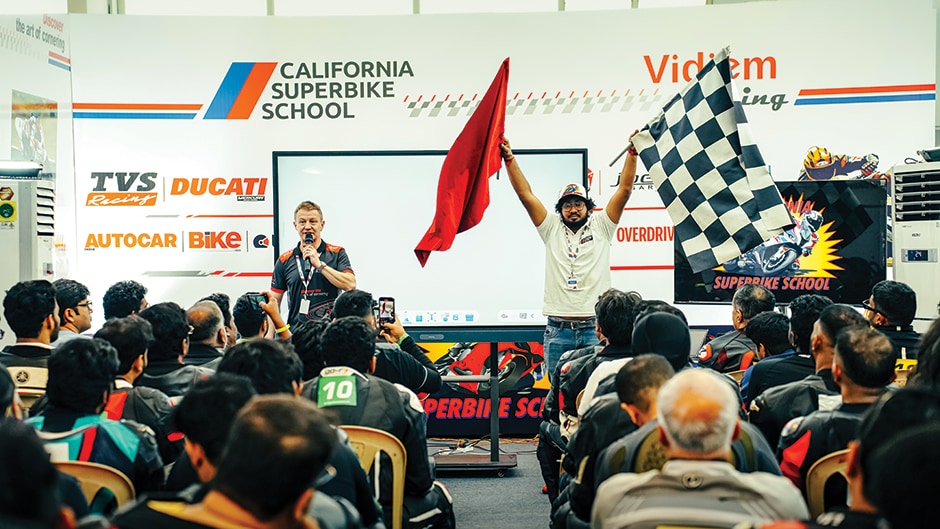
The California Superbike School in India exists because of TT Varadarajan, who brought this curriculum to our shores and kept it relevant for Indian riders. This year, our publication received two invites - my Editor in Chief, Kranthi Sambhav and I seized this glorious opportunity.
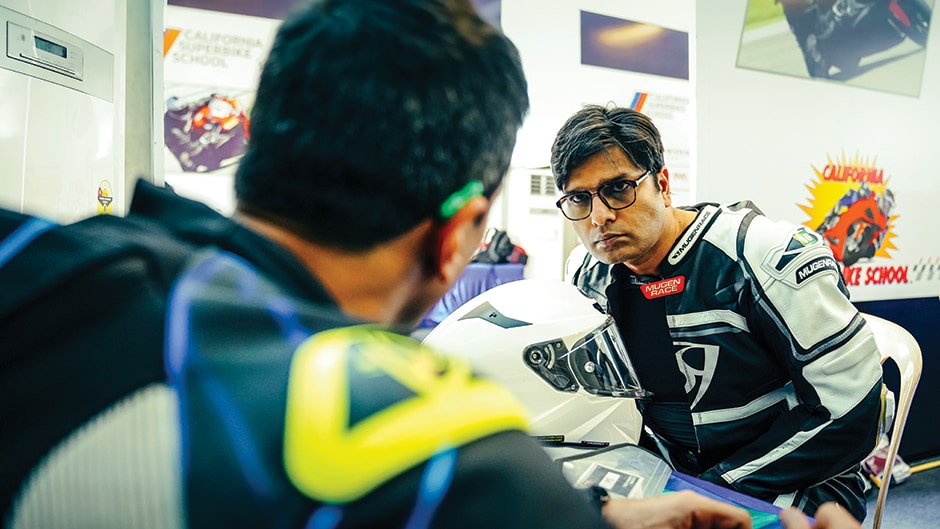
Watching someone with more than three decades of motorcycling experience admit that he had to relearn fundamentals was powerful. He openly acknowledged that thirty years on two wheels does not exempt you from correcting habits. That humility defines growth.
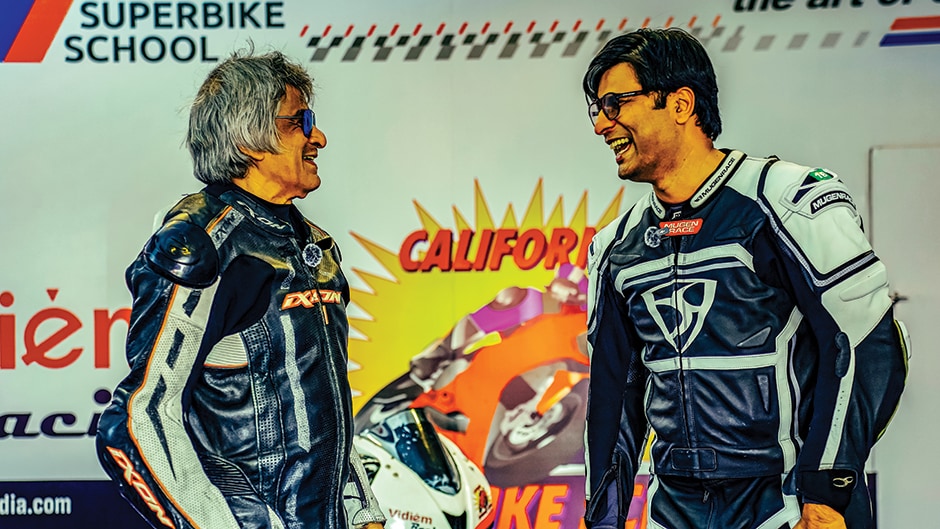
As a younger rider who reports to him, sharing this experience added another dimension. It was no longer just a professional trip. It was a shared pursuit of improvement. Between sessions, discussions extended beyond lap times into philosophy. What does it mean to be fast? What does it mean to be safe? Where does ego interfere?
The environment at MMRT over those days felt immersive. We arrived early for preparation. We helped unload the motorcycles from the Aprilia truck. We adjusted controls. We walked the paddock. We ate generously between sessions and then burned it all off on track. Each evening carried a blend of fatigue and satisfaction.
The track becomes a classroom. The paddock becomes a laboratory. The rider becomes a student again.
The Transformation
This was my third year attending the school. Yet this edition felt different. It felt complete.
C5 is no longer a corner I approach with doubt. Right handers no longer feel secondary. My spine alignment is cleaner. My body transitions are smoother. My lap times are quicker. My mind is calmer.
Most importantly, my psyche has changed.
Earlier, I rode fast occasionally. Now I understand why I am fast when I am fast. There is structure behind it. There is discipline behind it. There is control behind it.
The Aprilia RS 457 GP Replica played a crucial role in that transformation. It proved that you do not need excessive power to go quicker. You need trust, balance, and clarity. Over three days, the motorcycle built trust methodically and by the time I rolled back into the paddock for the final time, it felt like an extension of my intent.
I left Chennai different from how I arrived.
Not louder. Not more aggressive. More precise.
Three days at MMRT did not just improve my cornering. They recalibrated my relationship with speed. They reminded me that mastery is not about bravery. It is about understanding.
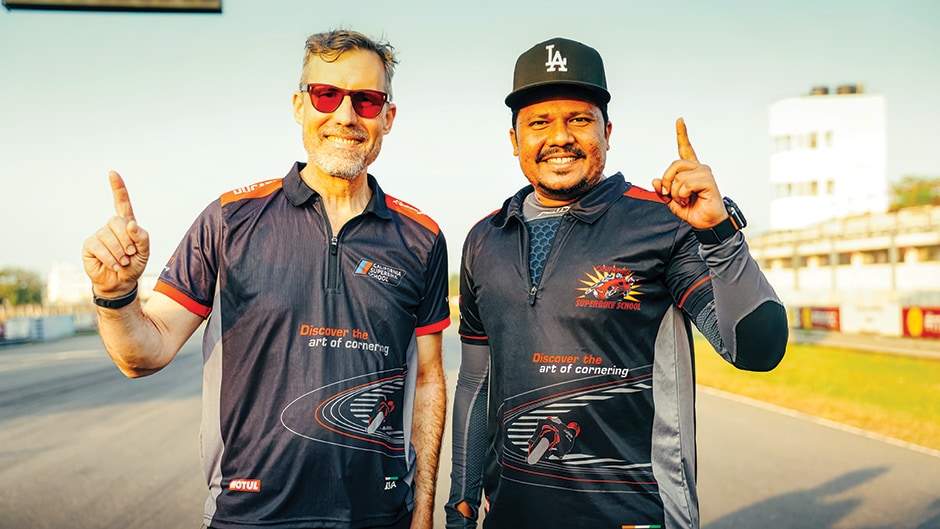
There is something pure about spending an entire day riding, debriefing, eating, hydrating, and repeating the process. When you are fully immersed in something you love, everything else temporarily loses volume. The noise of the world drops. Status symbols, social media wins, material flexes. They all fade into the background when you are chasing a cleaner apex.
For those three days, life was reduced to essentials. Ride. Learn. Improve. Repeat. Every action was fruitful. The rest could wait.
And perhaps that is the real addiction. Not speed. Not lap times. But the clarity that comes when everything superficial makes zero sense and only the pursuit in front of you feels real.
Somewhere between the second last right hander and the final exit onto the main straight, I realized something simple.
I am no longer chasing speed.
I am chasing perfection.
Related Stories